
“This transformation has fundamentally changed the way designers approach their work.
Client briefs today are more structured, more visual, and more intentional. Instead of broad directions, clients often come with curated references, mood boards, and a defined emotional outcome they want to achieve.
At the same time, the role of the designer has expanded. It is no longer about offering options – it is about interpreting, refining, and sometimes even challenging the brief to create something cohesive and meaningful.”
Understanding the Modern Event Landscape
The GCC event scene is defined by diversity – from intimate private moments to large-scale productions – all driven by a shared demand for experience-led design.
Proposals and private celebrations are becoming more refined, focusing on emotion, location, and precision rather than scale. Birthdays have evolved into curated visual experiences, especially for adults, where elegance and personalisation take priority.
Weddings remain the most layered format, designed as a complete journey rather than a single moment. In parallel, corporate events are moving toward minimal, clean aesthetics that balance branding with functionality.
Across all categories, one shift is clear: Events are no longer simply decorated – they are intentionally designed to create lasting impressions.
"Luxury today is not about how much you add - but how precisely you choose.”
What truly defines Great Decor
There is a common misconception that great decor is defined by complexity. In reality, it is defined by control.
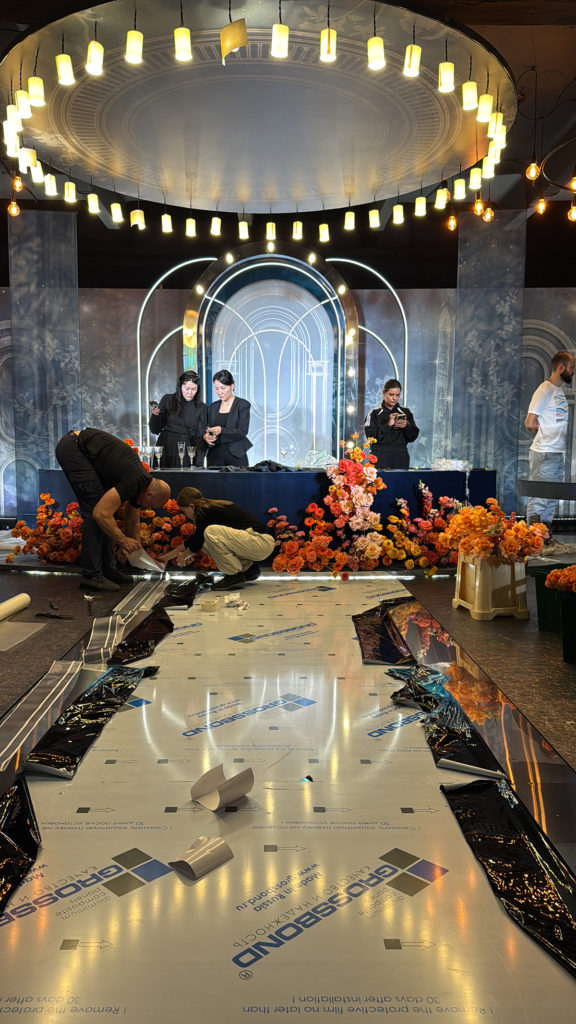
Control of space – understanding proportions, scale, and how elements are positioned within the environment. Control of light – shaping mood, depth, and focus through both natural and artificial sources. Control of interaction – how materials, textures, and structures respond to each other within the same composition.
The strongest designs are built on a clear foundation:
- composition
- lighting
- material quality
- spatial flow
“One of the most common mistakes, even in high-budget projects, is treating these elements separately. For example, lighting is often considered after the decor is already designed or installed. As a result, even well-executed setups can lose depth, atmosphere, and clarity.
This is why a budget alone does not guarantee a strong result. Without alignment between space, light, and materials, even the most expensive elements can feel disconnected.”
Each of these elements works together to guide the experience – subtly directing attention, movement, and perception without overwhelming the space.
When these elements align, the result feels effortless – even when the execution behind it is highly complex.
From Excess to Intention
The industry has evolved.
There was a time when decor meant volume – more flowers, more layers, more visual impact. Spaces were filled to impress.
Today, the most refined designs are moving in the opposite direction.
Not empty – but intentional.
We are seeing a shift toward:
- clarity over chaos
- balance over overload
- focus over saturation
“This shift is also reflected in how budgets are distributed. Instead of spreading resources across multiple elements, more emphasis is placed on fewer, higher-quality components — materials, lighting, and execution.
“Less but better” is achieved not by reducing design, but by increasing precision. Every element carries more responsibility and, therefore, requires a higher level of detail and control.”This is not minimalism as a trend. It is maturity in design thinking.
Defining Trends of 2026
The Return of Draping
Draping has returned – but in a new form.
It is no longer heavy or traditional. Today, it is light, fluid, and architectural. Fabrics are used to shape space, soften structures, and introduce movement.
What was once decorative has become a tool for atmosphere
Minimal Luxury & Futuristic Simplicity
Luxury is now expressed through restraint.
“In practice, this approach raises the standard of execution. With fewer elements in the space, every detail becomes more visible – meaning imperfections in finish, alignment, or proportion are immediately noticeable.
Minimal luxury does not simplify the work – it elevates the standard of execution, demanding greater control, craftsmanship, and attention to detail.”
Clean lines, neutral palettes, and materials such as acrylic, mirror, and chrome define this direction. The focus is not on quantity, but on precision and finish.
Statement over Saturation
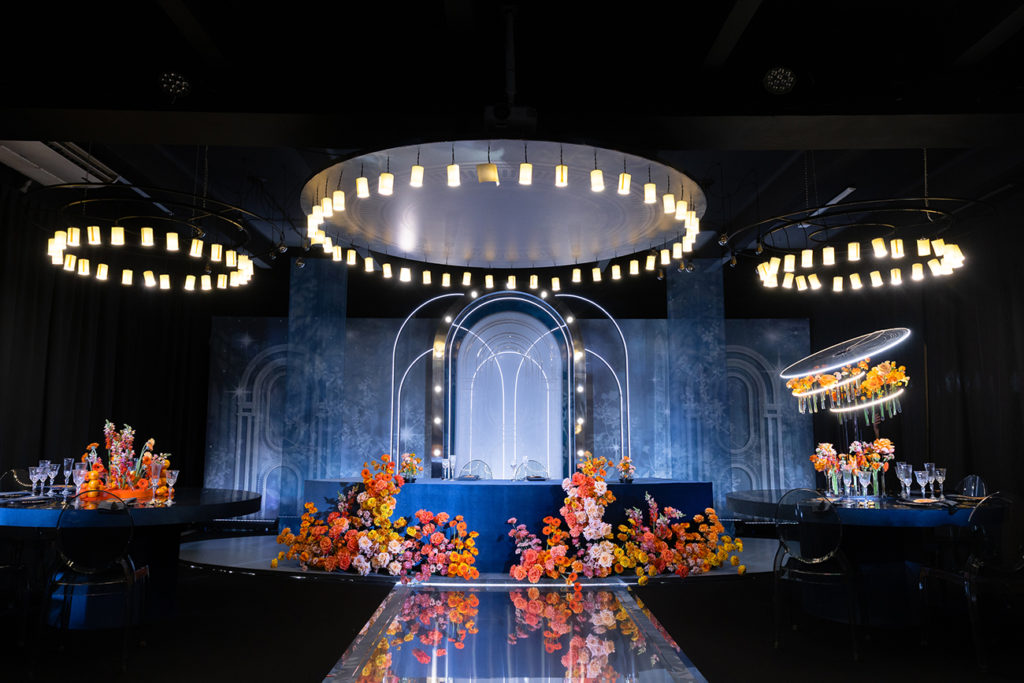
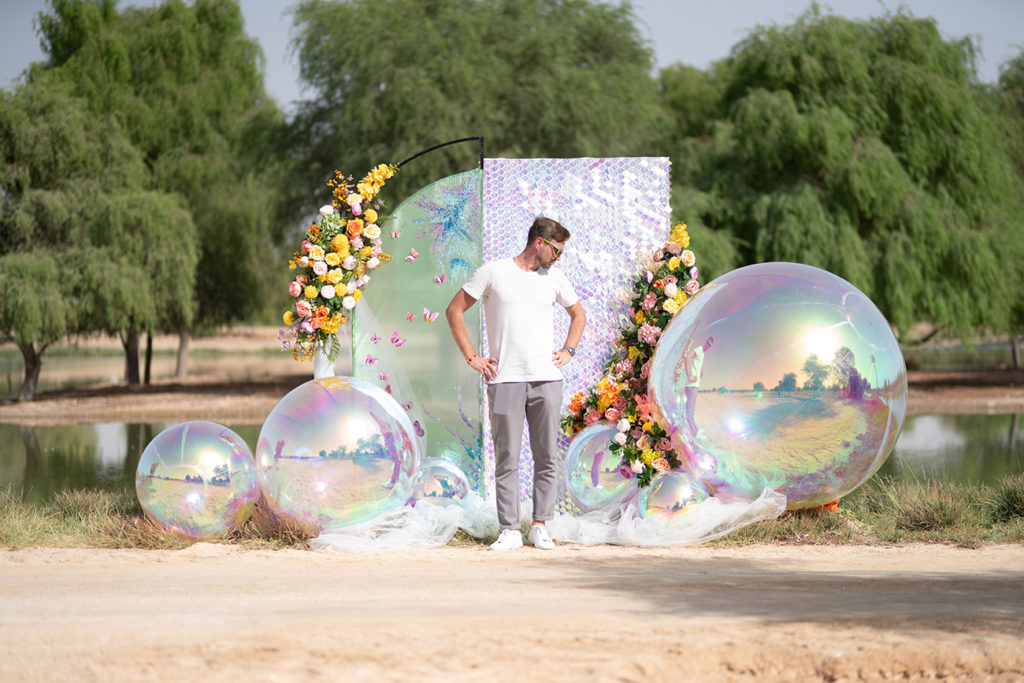
The idea of filling a space is being replaced by defining it. Rather than layering multiple elements, today’s approach focuses on a single, well-executed feature – a sculptural installation, a statement centrepiece, or a signature backdrop that shapes the entire space.
This is not about doing less, but about designing with precision. A strong focal point creates clarity, guides attention, and allows the space to breathe, making the overall experience feel more refined and intentional.
The impact of modern design lies not in quantity, but in how confidently one idea is expressed.
If everything stands out, nothing truly does.
Colour Direction in 2026
Colour is becoming more intentional.
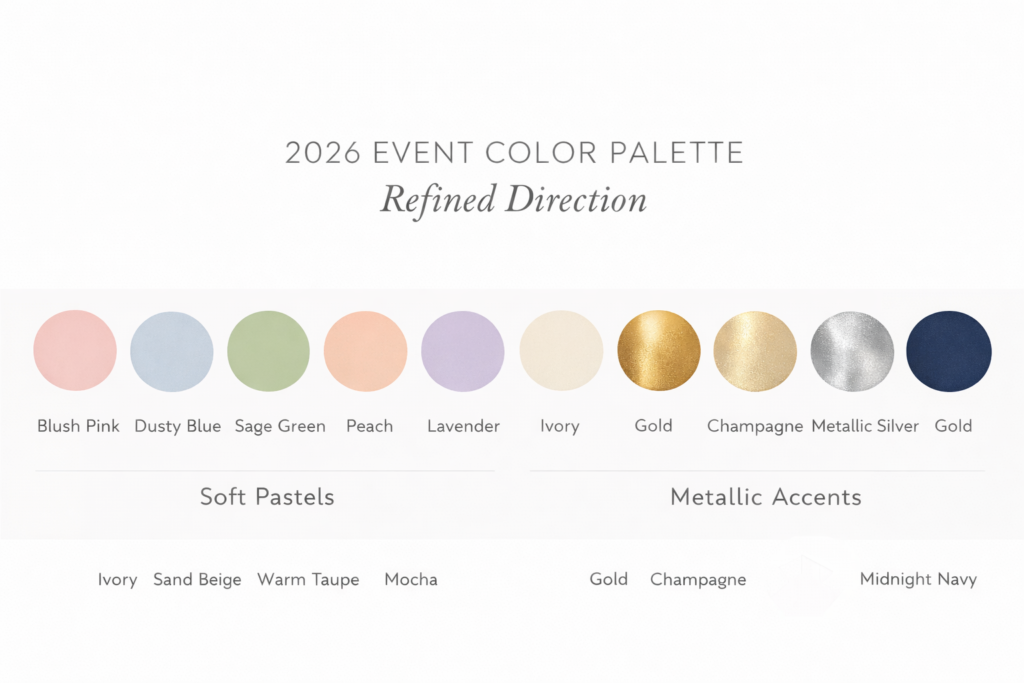
“Soft pastels, warm neutrals, and subtle metallic accents define the base palette, while deeper tones are introduced selectively to create contrast and depth.
In practice, this layered approach allows designers to control the atmosphere more precisely. Instead of multiple competing colours, the palette works as a system – supporting zoning, depth, and visual hierarchy.
This is also why the industry is moving away from overloaded palettes. When too many colours are introduced, the space loses clarity, and the overall composition becomes harder to read.
Restraint, in this context, is not a limitation – it is a tool.”
Why Trends always Return
Design is cyclical by nature – but never repetitive.
Trends do not disappear; they evolve. What changes is not the idea itself, but the way it is expressed. Materials become more refined, technologies allow greater precision, and perspectives shift with each new generation of designers. As a result, familiar concepts return – not as copies, but as reinterpretations shaped by the present moment.
What once felt traditional can suddenly feel modern again, simply through a change in scale, texture, or context. Draping, for example, has existed for decades, yet today it appears lighter, more architectural, and emotionally driven.
The future of design is not about constant invention or chasing something entirely new. It is about understanding what already exists – and reimagining it with clarity, purpose, and intention.
The Source of Creative Inspiration
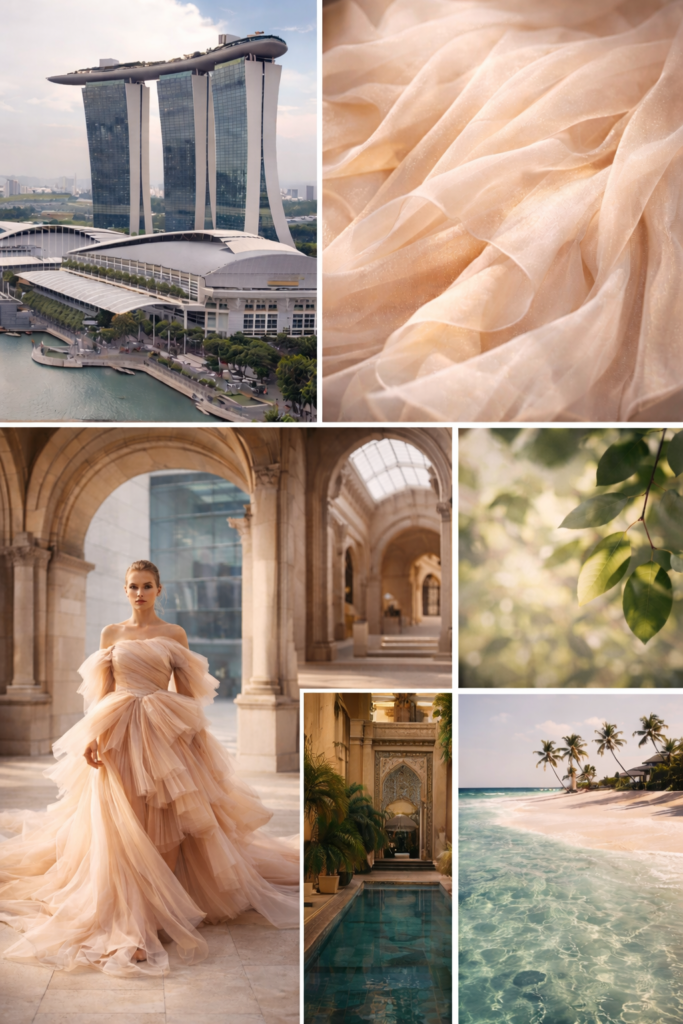
Inspiration rarely comes directly from the event industry. It comes from observing the world – architecture, travel, fashion, and nature.
Architecture teaches structure and proportion. Travel brings new atmospheres and cultural perspectives. Fashion introduces texture, layering, and colour balance. Nature adds movement and organic flow.
Over time, these influences form a perspective that shapes every decision.
Because inspiration is not about copying what exists – it is about translating what you see into something people can feel
Why Trends always Return
There is always a moment – just before a guest fully enters a space – where everything is still unknown.
That moment is where design begins.
Event design is not about individual elements. It is about how they come together to create a feeling.
And that feeling is never created alone.
Behind every refined event is collaboration – planners, florists, production teams – professionals who understand not only execution, but sensitivity. The strongest results come from teams that elevate each other.
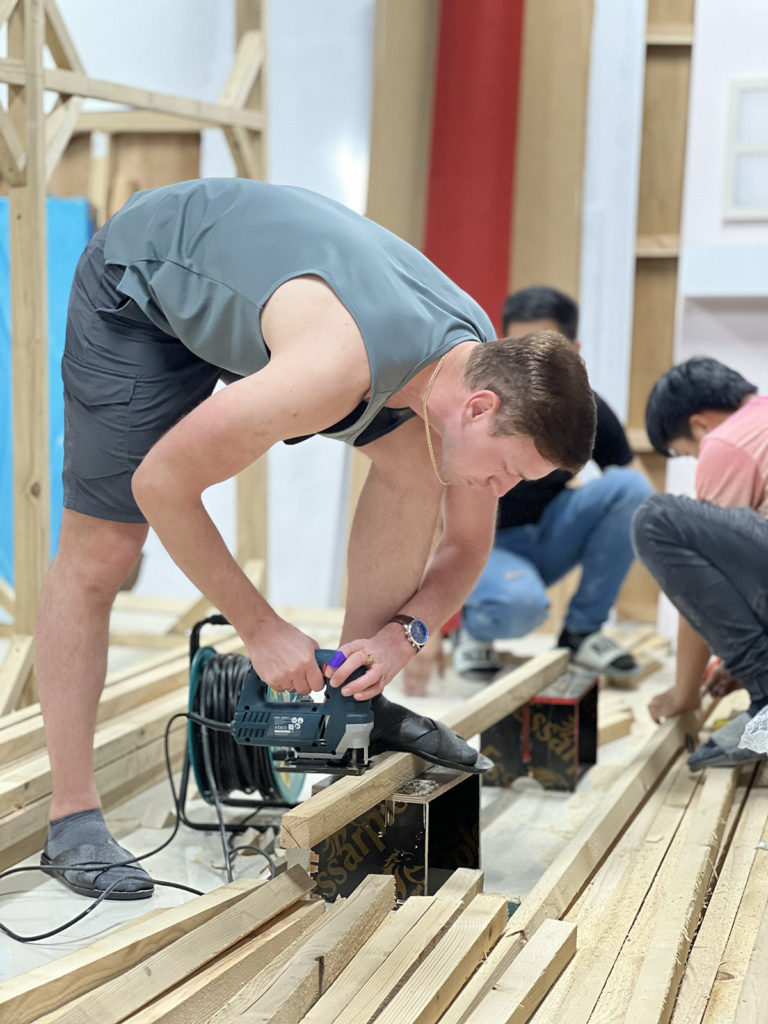
At the same time, one of the most critical layers lies in the materials the client rarely sees.
Every material is selected not only for aesthetics, but for:
- safety within the environment
- structural stability
- interaction with lighting
Because a design that looks beautiful but does not perform perfectly is not luxury.
Florals follow the same logic. Fresh and artificial elements are not in competition – they serve different roles.
Fresh flowers bring life and softness. Artificial elements provide structure and consistency.
The most refined designs combine both – seamlessly. And then comes the most important decision: what not to add.
Because today, the most powerful spaces are not the most filled – they are the most intentional.
The Final Layer
I n the end, people do not remember the number of flowers or the scale of the setup. They remember how it felt.
“What stays with them is often not a specific detail, but a sequence of impressions – how their attention was guided, what caught their eye, where they paused, and how naturally the space unfolded around them.
This is where design becomes more than visual. It becomes a way of controlling perception – directing focus, creating rhythm, and shaping how the experience is absorbed.”
The atmosphere. The emotion. The moment.
And that is the true role of design. Not to decorate a space – but to shape something invisible.