
In today’s context, this becomes critical. Attention spans are shorter, distractions are constant, and without a properly designed delivery system, even strong speakers fail to hold the room. This is why technical production is no longer about “equipment rental.” It is about controlling attention.
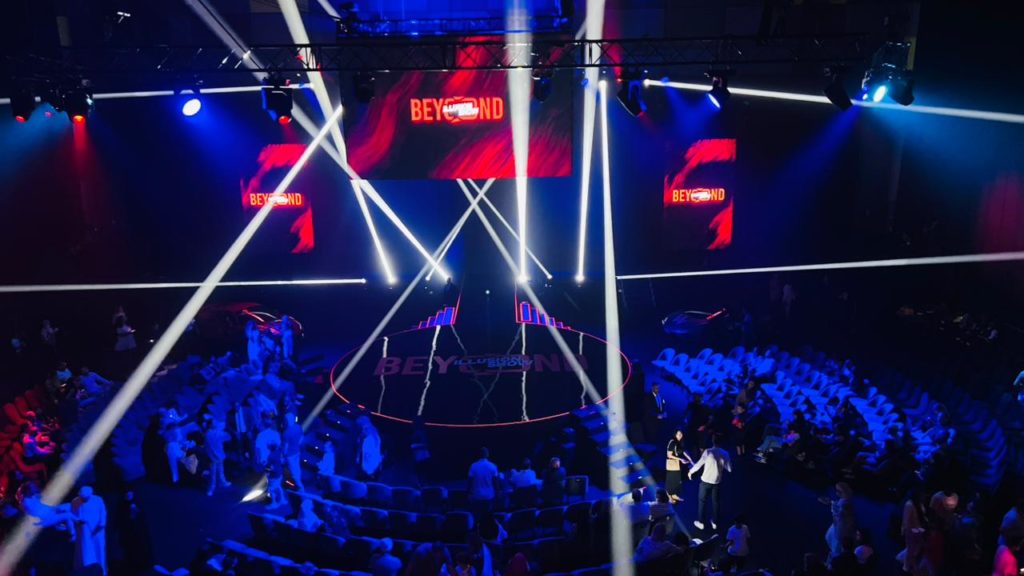
Sound is the first filter in this system. At a conference, it should not be “powerful” – it should be intelligible. Clarity of speech matters far more than volume. If a message is not understood instantly, the audience disconnects. Uneven coverage, lack of monitoring for speakers, or incorrect microphone choices rarely look like production failures, yet they directly reduce engagement. People do not complain – they simply stop listening.
In Dubai, this challenge becomes more complex due to multilingual audiences. Translation is not an add-on; it is a parallel layer of communication. If simultaneous interpretation is delayed, if the audio quality in headsets is inferior, or if interpreter booths are placed without proper acoustic consideration, a significant portion of the audience is effectively excluded. The paradox is that organizers often invest in high-level international speakers while underestimating translation quality – and as a result, much of the message is lost.
In a region where English, Arabic, and often Russian coexist in the same room, interpretation becomes an integral part of the content architecture, not a service.
Lighting presents a similar issue, though it is less obvious. It is still widely treated as decoration, while in conferences it functions as a tool of focus. If the speaker’s face is not clearly visible, if color temperatures are inconsistent, or if the stage is not properly separated from the audience area, attention begins to dissipate. In Dubai, this is often complicated by venues with aes look impressive, but they reduce control over lighting conditions, especially for video. As a result, the visual image becomes unstable – and this directly affects perception.
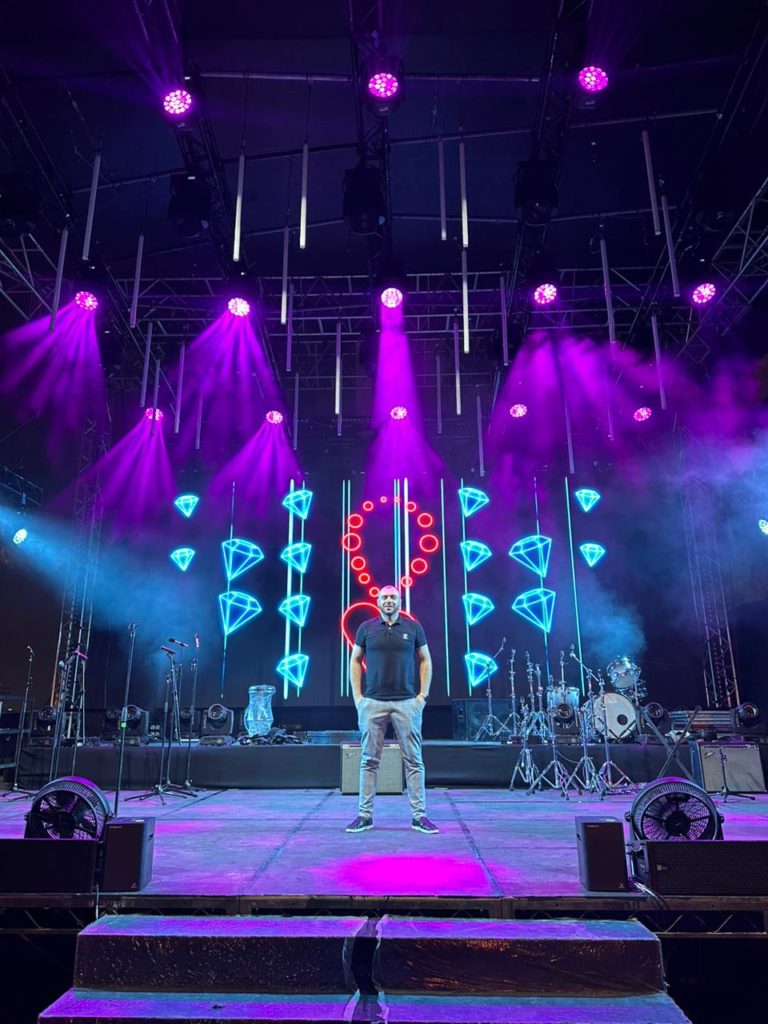
The stage defines the physical logic of the event. It determines how a speaker moves, where the audience looks, and how comfortable it is to engage with the content. In the local market, this is often limited by venue versatility. The same space may host a conference today, a wedding tomorrow, and an exhibition the next day. The stage becomes a compromise rather than a designed interface, which impacts the dynamics of presentations.
Screens are another area where assumptions often replace strategy. A large screen does not automatically mean an effective one. If content is not adapted, if contrast and scale are not considered, if there is no coordination between the speaker and the operator, the screen begins to compete with the speaker instead of supporting them. In Dubai, there is also a tendency to prioritize visuals that look impressive in photos rather than readable in the room. The result may perform well on social media but fail for the live audience.
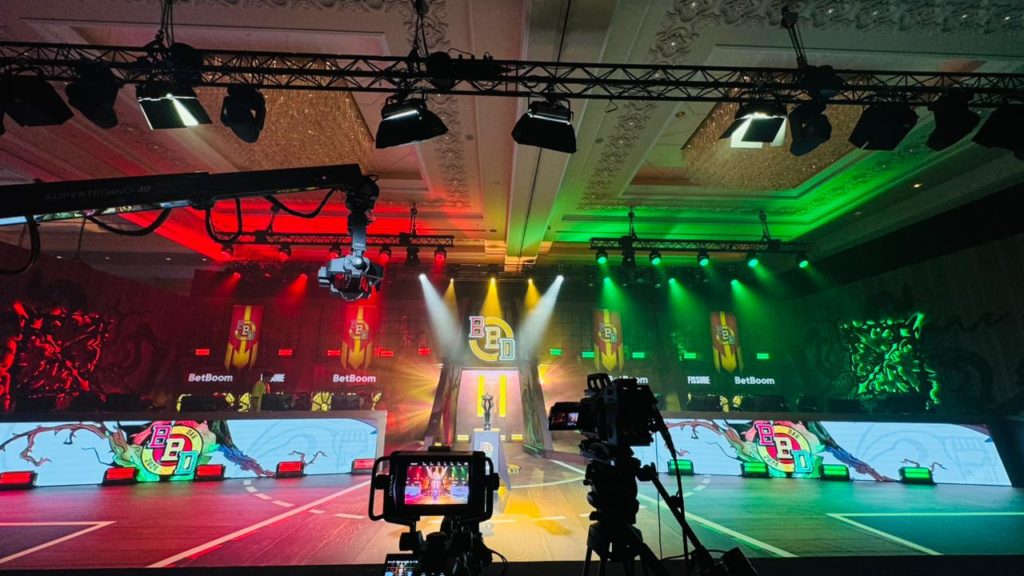
A separate layer is multi-camera production and live broadcasting. Today, a conference exists simultaneously in two dimensions: physical and digital. The key mistake is treating video as documentation rather than direction. A single camera records the event, but it does not create engagement. Camera switching, close-ups, audience reactions – these elements define how the event is experienced online and how it lives on in recorded form.
In Dubai, broadcasting introduces additional challenges. Not all venues provide stable internet infrastructure, dedicated lines are not always available, and there may be technical or administrative limitations on connectivity. As a result, streaming becomes a high-risk component. Any failure – lag, interruption, or drop in quality – directly impacts the credibility of the event, particularly for international audiences.
At the same time, live camera feeds are often displayed on in-room screens. This creates an important dynamic: if the screen image is more engaging than the stage itself, the audience shifts its attention away from the speaker. This is not a technical issue – it is a directing decision.
Teleprompters are another understated but critical tool. In a market where executives, government representatives, and international speakers frequently present, precision matters. A teleprompter ensures structure, timing, and consistency. However, improper use immediately exposes a lack of confidence. Like any professional tool, it requires experience, not just installation.
When all these elements are considered together, the core issue becomes clear. The problem is not in individual components, but in the absence of a unified system. In many projects, sound, lighting, video, interpretation, and broadcasting are handled by separate contractors. Each delivers their part, but no one is responsible for the overall perception.
In Dubai, this is amplified by the pace of the market. Projects are assembled quickly, teams are often international, and standards vary. Add venue restrictions, permit requirements, and limited setup time, and technical production frequently operates under compromise.
Yet this is precisely where the opportunity lies. A modern conference is not a collection of services – it is a synchronized system in which every element reinforces the others. When this system is properly designed, even average content performs better. When it is not, even strong speaker lineups fail to deliver impact.
Ultimately, content creates meaning. Technical production determines whether that meaning reaches the audience at all.