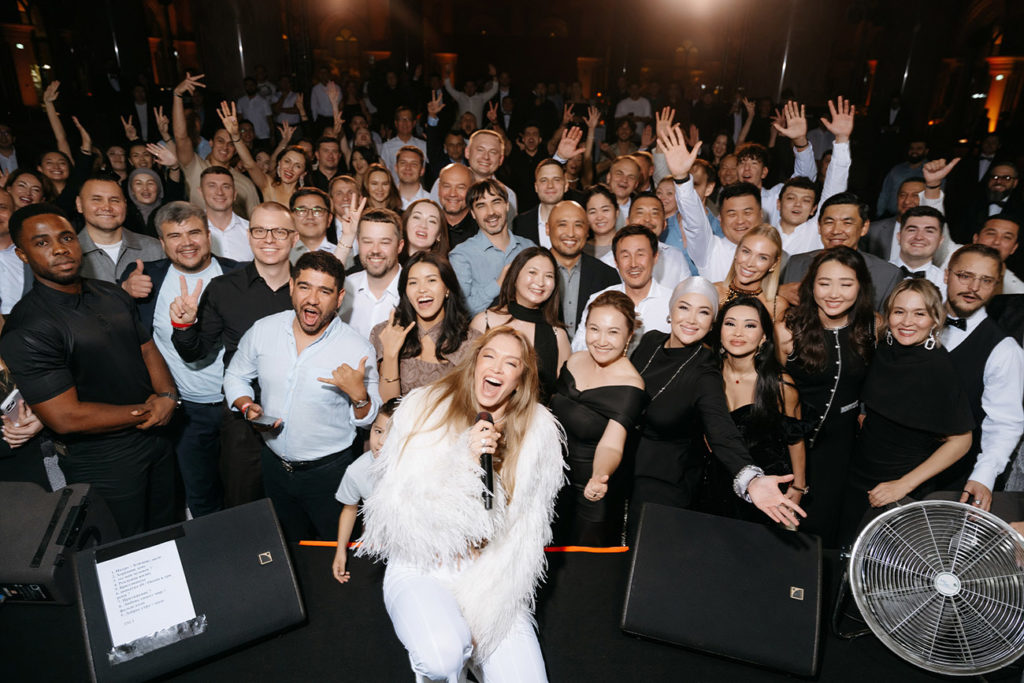

This feeling is familiar to anyone who has worked in the UAE for any length of time. Crises arrive regularly here. Only the reasons change – geopolitics, economics, pandemics. The question has never really been whether a crisis will come. It has always been: how fast will the UAE adapt this time?
Why Dubai behaves differently
The UAE economy is structurally built around tourism, aviation, and international mobility. Tourism in Dubai alone accounts for roughly 10% of GDP in its direct form – and when you factor in aviation and related infrastructure, it becomes one of the foundational pillars of the entire system. A model like that cannot afford to stop and wait.
The pandemic made this unusually visible. Dubai International Airport closed on March 17, 2020. It reopened on July 7 of the same year – three and a half months later, while much of the world remained shut for over a year. That was not improvisation. It was a deliberate strategy: not to wait for complete safety, but to learn to operate while managing risk. Testing, protocols, restrictions – but the market stayed on.
"The message was characteristically pragmatic: yes, there are rules. We are open. Come.”
The structural features of the UAE tourism sector – high dependence on external markets, sensitivity to geopolitical shifts, fast demand cycles – are the same factors that make it vulnerable and flexible at the same time. They are why the response to a crisis here begins before the crisis is resolved.
What is happening on the ground right now
From the inside, the current picture follows a familiar pattern. Group projects are slowing. Clients are taking longer to commit. Budgets are being revised. Timelines are shifting. None of this is surprising, and none of it means the market has disappeared.
It has contracted and changed shape – which is not the same thing.
This distinction matters practically. During the pandemic, MICE activity came close to a full stop, but FIT and VIP requests continued moving. That is a reminder worth keeping in mind now: a market that looks frozen from one angle is often still moving from another. Dependence on a single segment – even a dominant one – is a structural risk.
What adaptation looks like in practice
During COVID, a client came to us needing a full MICE programme, including a gala dinner. The problem was straightforward: restaurants and hotels could not legally host that kind of event. The format the client needed did not technically exist anymore.
The solution came from stepping outside the standard toolkit. We proposed holding the gala dinner at Sonara Camp in the desert – an open-air venue that fell outside the category of establishments subject to indoor restrictions. All protocols were observed: distancing, safety requirements, documentation. The client received a complete event at a time when that was simply not possible in most countries.
This was not creative problem-solving for its own sake. It was finding a workable answer under real constraints.
Why this market keeps moving
Looking beyond individual cases, the UAE has several structural advantages that explain its pattern of behaviour in downturns.
Speed. Decisions are made quickly – at the business level and at the government level.
Flexibility. Formats, venues, and approaches can change mid-process without the whole structure collapsing.
Pragmatism. The operating standard here is not the ideal scenario. It is the workable one.
Coordination. When it matters, industry and government tend to move in the same direction.
That last point is worth noting concretely. In March 2026, before the market had begun to recover, Dubai approved an AED 1 billion business support package for the hospitality and tourism sectors. It included deferrals on hotel sales fees and the tourism dirham – measures that directly reduce cost pressure on MICE operators during a period of uncertainty.
The significance is not only in the package itself, but in its timing. Support came before demand returned, not after.
The real skill in UAE MICE
Working in this market is not – or not only – about access to an exceptional inventory of venues. Dubai has hundreds of world-class spaces, and that matters. But it is not the differentiator.
That is what this market trains you for. And perhaps that is precisely why it does not stop when conditions get difficult. It adjusts its shape and keeps moving.
"The actual skill is the ability to operate when stability is not guaranteed.”