
Context / Problem
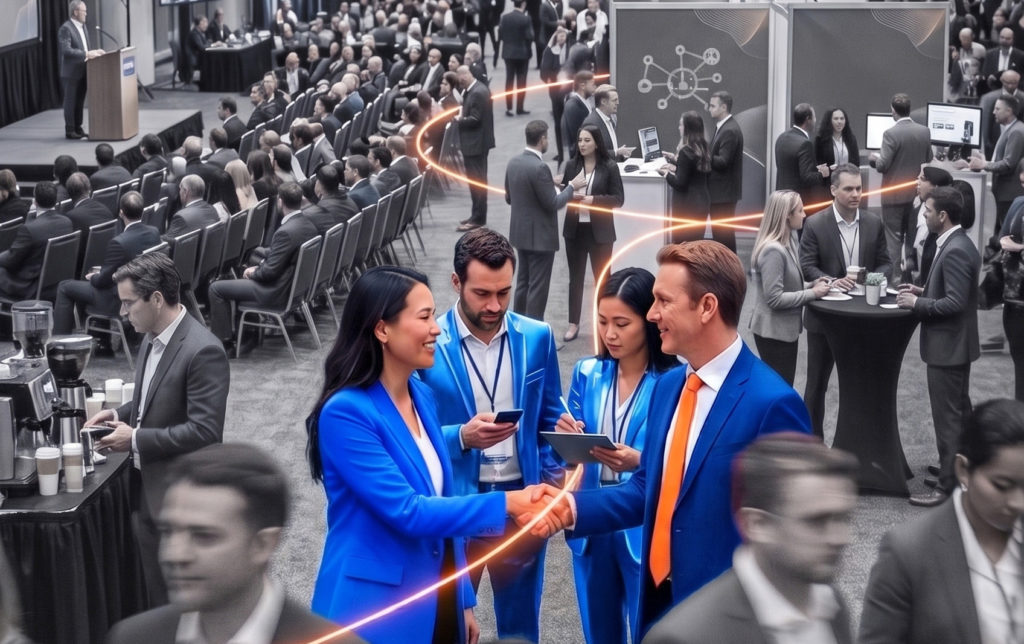
In smaller events, this was manageable. In today’s environments, where conferences and exhibitions bring together hundreds or thousands of professionals, it becomes increasingly inefficient. The issue is not attendance. Opportunity is abundant. The problem is accessing the right people within that density.
In reality, the most valuable connection is often physically close, just not visible. It might be in another room, across the venue, or a few meters away. Yet without a way to identify that person, the interaction never happens. Instead, time is spent navigating conversations that lead nowhere, exchanging contacts out of courtesy, and following up without clear intent. As the cost of participating in events continues to rise, this model is becoming harder to justify. A new approach is beginning to emerge – one that moves from accidental networking to intentional connection.
The Shift: From Chance to Precision
This evolution is not about increasing the number of interactions, but about improving their quality before they happen. It reflects a broader change in how professionals approach networking, less as a social exercise, and more as a structured, outcome-driven process. Three principles are defining this shift:
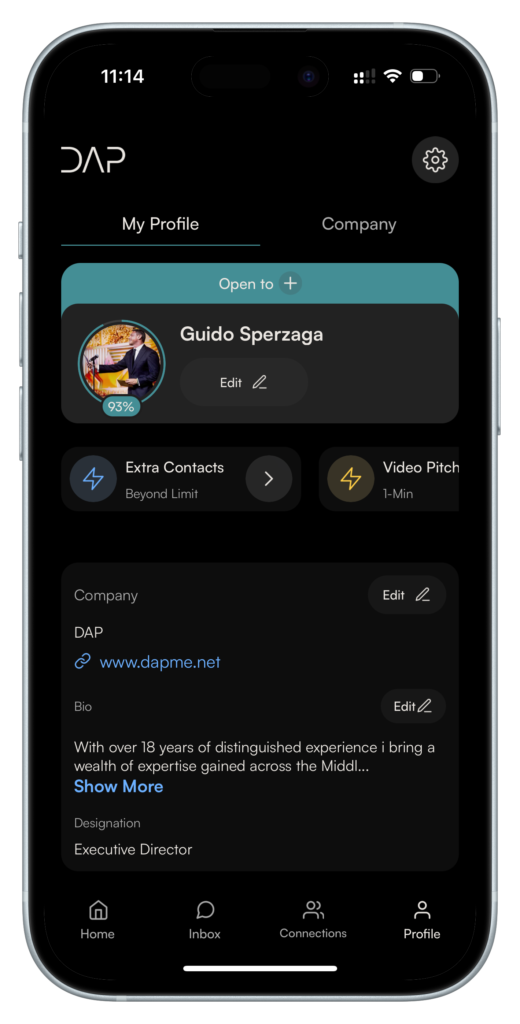
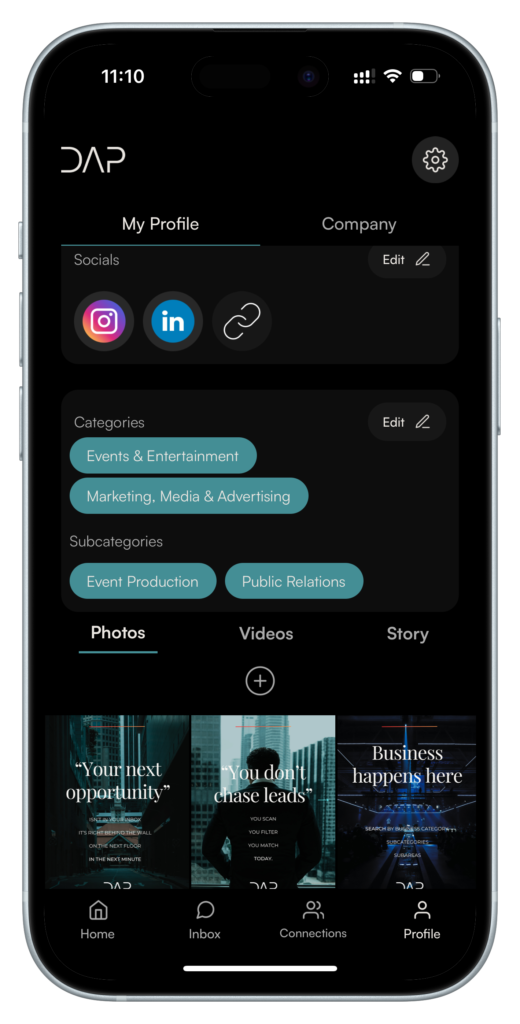
- Identity over job titles:
Professionals are no longer defined simply by their role. Clear positioning, across industries, specializations, and capabilities, creates a more accurate representation of who they are and what they offer. - Relevance over random introductions:
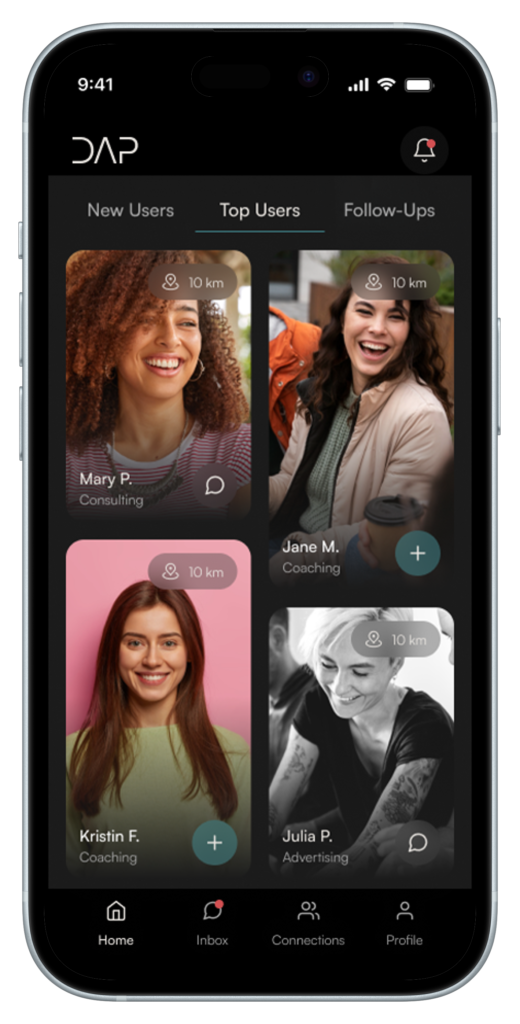
The goal is no longer to meet more people, but to meet the right people. Compatibility is increasingly established before the first interaction, rather than discovered during it. - Proximity over passive networking: Physical presence becomes a strategic advantage. Instead of relying on chance encounters, professionals can identify relevant counterparts within their immediate environment and act on that proximity.
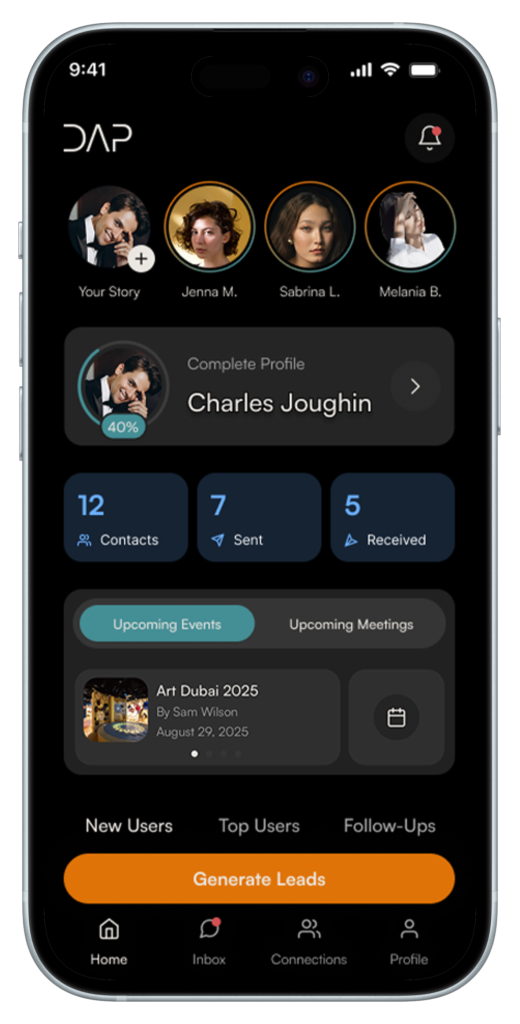
Platforms like DAP are emerging within this context, not as standalone tools, but as part of a broader shift toward proximity intelligence: the ability to understand who is around you, why they matter, and when to connect.
Real Use Case
At a mid-size industry conference, a business development manager arrived with a clear objective: identify potential clients within a specific sector. Traditionally, this would involve moving through the venue, initiating conversations, and gradually filtering relevance. It’s a familiar process, and a time-consuming one.
By applying proximity-based filtering through DAP, the user defined the type of profiles they were looking for – industry and decision-making level – and scanned the immediate environment. Within minutes, they identified a shortlist of relevant professionals already present at the event. The shift was immediate. Conversations were no longer exploratory; they were intentional. Time was spent engaging with people who already aligned with the objective, rather than discovering misalignment midway through an introduction. What changed was not the number of interactions, but their precision.
Results & Industry Implications
The most immediate impact of this approach is a change in how time is used. Instead of moving from one uncertain interaction to another, professionals focus on conversations that have a clear basis for relevance. This reduces friction and accelerates engagement. When both sides understand each other’s role and value before speaking, discussions move faster into meaningful territory. The traditional introductory phase becomes shorter, and the interaction becomes more purposeful. The outcome is not more leads, but better ones – fewer in number, but stronger in potential.
This shift has broader implications for the events industry. For organizers, it introduces a new dimension of value. If attendees can generate targeted, high-quality connections, the event becomes more than a gathering; it becomes a business environment with measurable outcomes. This can drive stronger attendance, deeper engagement, and a more results-oriented audience. In this sense, it creates a clear win-win dynamic: participants gain efficiency and relevance, while organizers increase the perceived and actual value of their events. For participants, the change is equally significant. Instead of relying on chance, they can build structured pipelines of opportunity simply by being present and intentional in the right environment.
A New Standard for Event Networking
Most events today are still optimized for attendance. The next generation of events may be optimized for connection quality. This represents a fundamental shift in how value is defined – not by how many people are present, but by how effectively those people can connect, engage, and generate outcomes.
In this context, proximity is no longer just a physical condition – it becomes an intelligent layer that, when combined with clear identity and defined intent, unlocks opportunities that were previously invisible. The implication is simple but significant: event success is no longer about meeting more people, it’s about meeting the right ones, at the right time, with the right context.