


When the region’s airspace closed this spring, hotel revenue teams watched the inbound pipeline disappear within days. Leisure bookings, incentive groups and conference room blocks were cancelled or pushed to “later”. One calendar kept moving: that of local families. Weddings were rescheduled, resized and rebooked, but they were not abandoned. The hotels that understood this early are now filling ballrooms and room blocks in months the market used to write off.
Demand that doesn’t need a boarding pass
Inbound tourism depends on three things a hotel cannot control: flights, travel advisories and how the region looks on foreign news. Corporate MICE adds a fourth: the budget committee, which is the first line to freeze in any crisis. A local wedding depends on a single decision made inside one family.
The guest list lives within a two-hour drive. The date follows the family calendar, not airline schedules. When pressure hits, families move the date by weeks, not years, because a delayed wedding carries a social cost that a delayed holiday never does.
That makes the local wedding the closest thing hospitality has to non-cyclical demand. It is booked months ahead, secured with deposits, and unaffected by the headlines that empty the lobby of tourists.
The closed-door wedding is a full-hotel product
The women’s celebration at an Emirati wedding is not an ordinary banquet. The ballroom is taken exclusively:
- no open sightlines from the atrium
- no glass the corridor can see through
- no staff wandering in from another function
- women serving on the floor
- women behind the camera
- strict device policies
The party runs well past midnight and winds down by 3am at the latest. The guests relax completely because no one outside can see in, and that privacy is precisely what the family is paying for.
For the hotel, the adjacent space cannot be sold to anyone else that night, so the real product is exclusivity. The revenue does not stop at the ballroom door:
- Before the event: the bride’s side takes suites a day or two early for beauty preparation, fittings and henna.
- On the night: relatives from Abu Dhabi, Al Ain, Ras Al Khaimah, Oman or Saudi Arabia check in rather than drive home at three in the morning.
- After: many stay on the following day.
One wedding therefore delivers ballroom hire, F&B at full per-head rates, a room block, suites, spa bookings and late-night services. It all comes in a single booking, often in periods when no tourist would arrive to replace it.
The Arjaan case: repositioning while others waited
Arjaan by Rotana, Dubai Media City, made its move while the strikes were still ongoing. Instead of waiting for inbound demand to return, the hotel rebuilt its marketing around the local wedding client.
By summer, traditionally a dead season for both weddings and hotel occupancy, it was running solid wedding volume. In September it has 20 weddings on the books. That is close to five a week, on dates that would otherwise have depended on a tourism recovery nobody could predict.
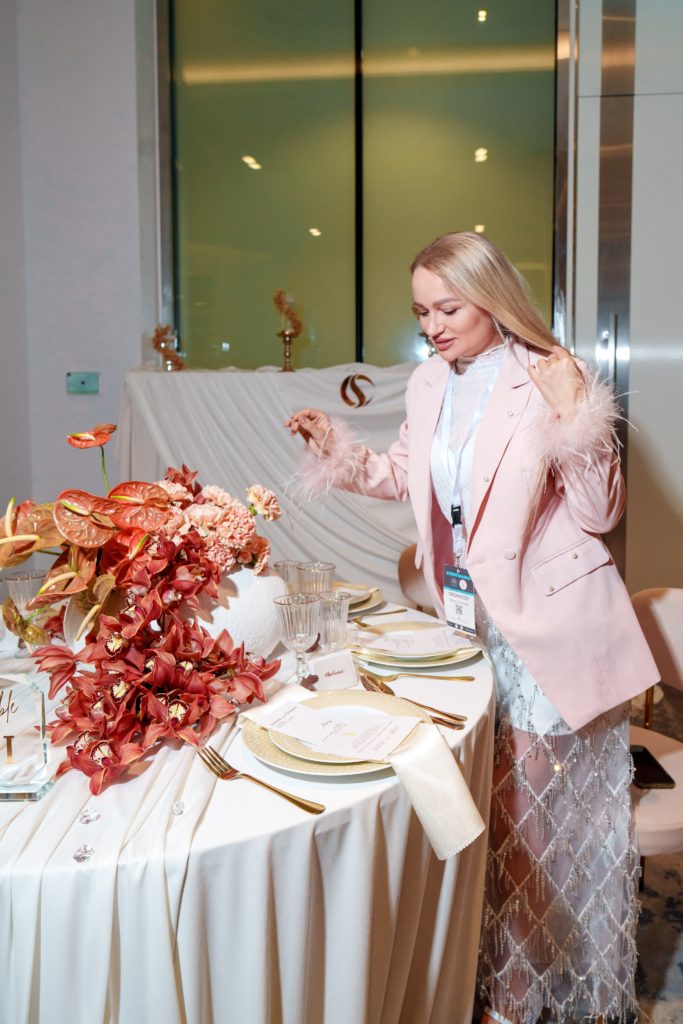
The same property gave an entire hall to Wedding Mania on 8 September. For nine hours, Veranda Hall worked as a live wedding venue: fresh florals, ceremonial arches and fully dressed tables. It served wedding professionals by day and more than a hundred brides by evening. A hotel that treats weddings as its core business rather than an add-on puts its own space in front of the couples who will book next season.
The numbers confirm a strategic direction, not an emergency patch. The hotel found a demand segment the crisis could not switch off, and built its commercial model around it before competitors had finished revising their forecasts.
What the product actually requires
Hotels that treat a local wedding as “a banquet with more flowers” lose the family at the first site visit. The requirements are operational and have to be solved before the contract, not on the night:
- a privacy audit of every door, window, service corridor and camera angle
- a confirmed roster of female service staff, not a promise to “arrange it”
- photo and video rules written into the contract
- dedicated set-up windows for the kosha (the bride’s stage) and décor teams
- valet and security capacity for hundreds of cars leaving after 1am
- room blocks with clear release dates
- one package combining ballroom, bridal suite and family rooms, so the family deals with one contact and one invoice
Hotels also need to recognise who actually decides. It is often the mother, the aunts and the women of the family, working with a small circle of trusted planners and kosha designers. That circle runs on word of mouth. A satisfied aunt is the most effective sales channel a hotel will ever have: one well-run wedding sells the next two in the same extended family.
Why the imagery has to be staged
The more private the product, the harder it is to market. No family will allow photographs of a real women’s celebration to appear in a hotel brochure. The only way to show the product is to produce it.
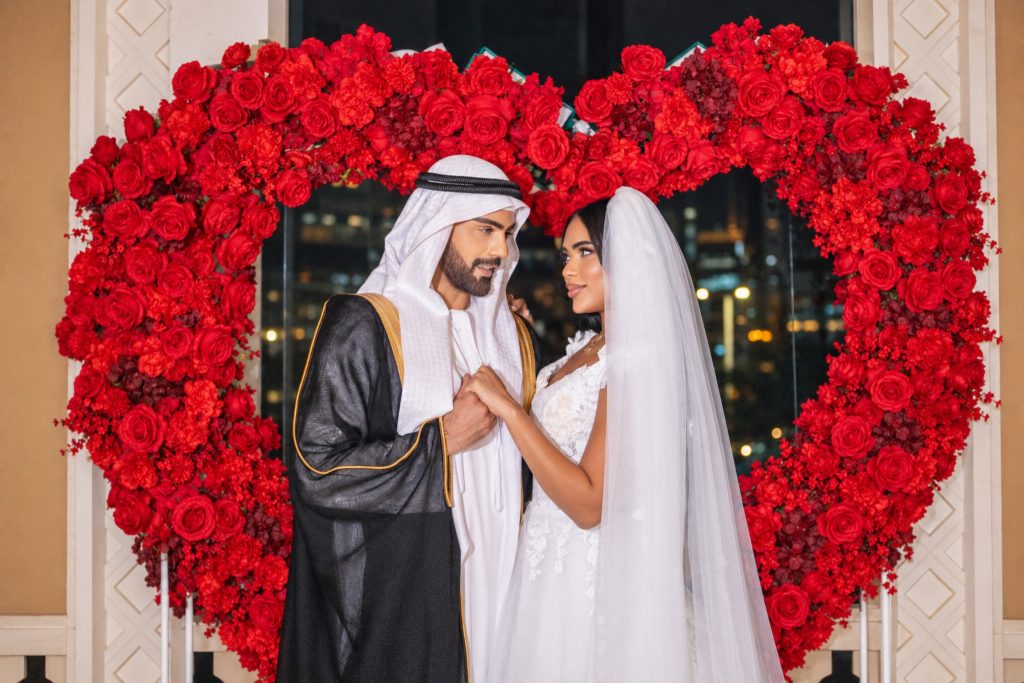
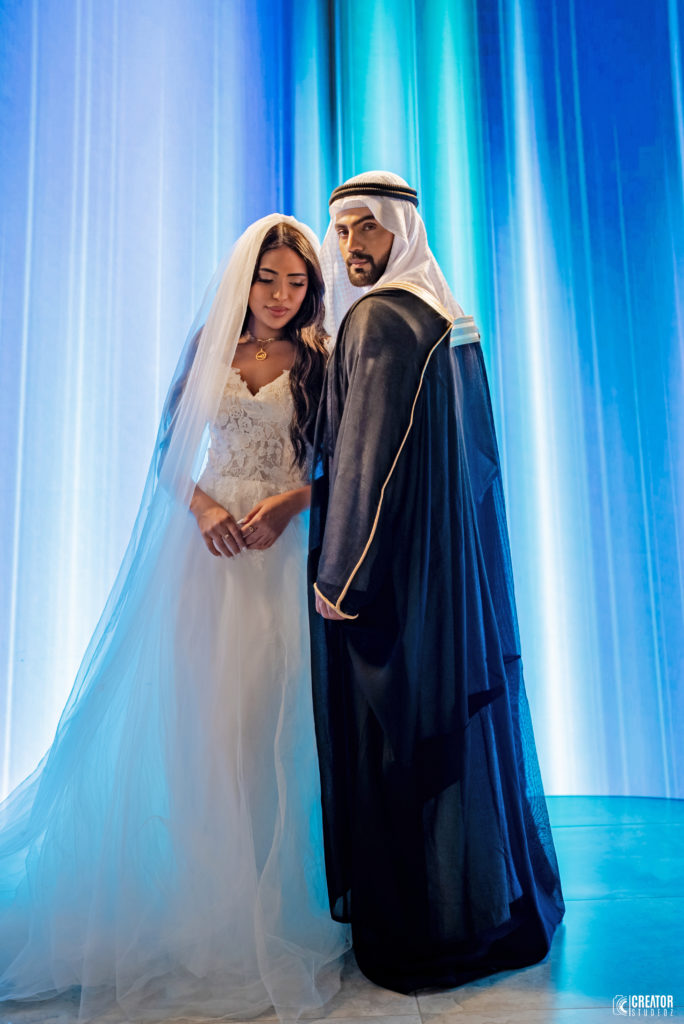
The couple in these images is exactly that: a staged pair created for Wedding Mania. The “bride” was transformed live during the bridal workshop while the “groom” prepared separately. The couple then moved through the venue’s décor locations, with guests following, phones raised. The results are on this page:
- the black-and-gold bisht and cathedral veil
- the red-rose heart arch against the Dubai Marina skyline
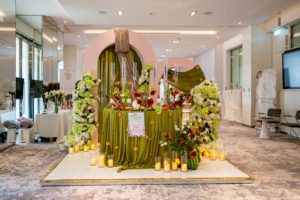
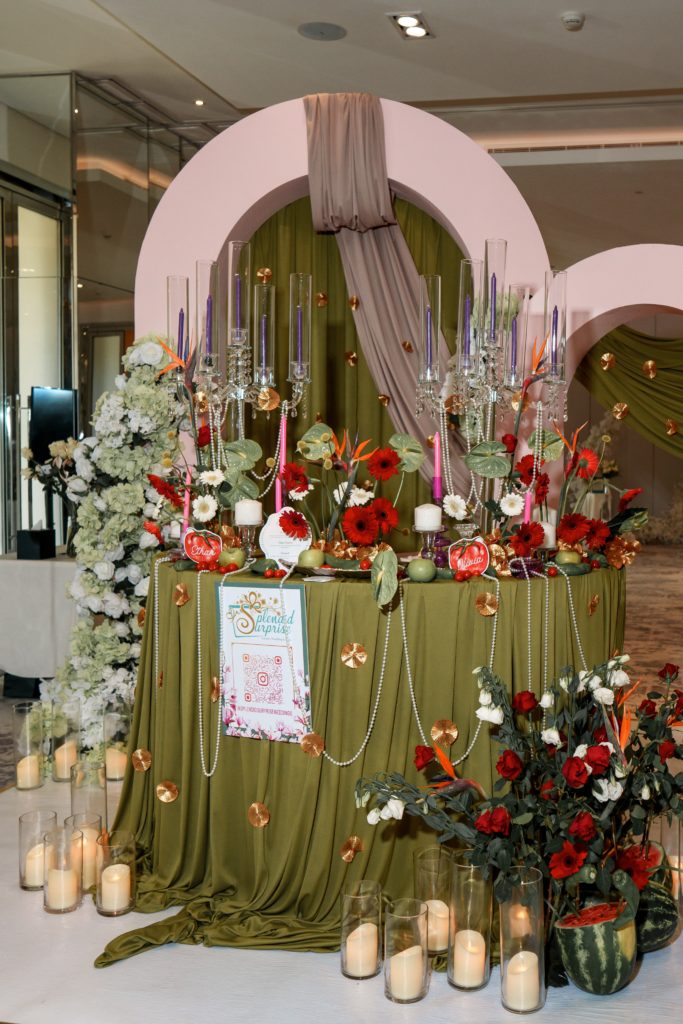
- the tablescape in olive velvet and blush
These images show a local family what their celebration could look like without exposing anyone’s actual wedding. For a hotel entering this segment, a strong styled portfolio is not decoration. It is the sales deck.
The line the crisis drew
For years, tourism and weddings sat side by side on the same revenue report, as if they were the same kind of income. The spring separated them. Tourism proved to be a cyclical line: strong in good seasons, first to vanish under pressure. Local celebrations proved to be a structural one.
The next disruption will come; in this region it always does. The hotels that invested in wedding infrastructure this year will not start from zero when it arrives. They will have a calendar that fills itself.
Disclosure: EventMania Festival and Wedding Mania are organised by EventMag.Me’s founder. Arjaan by Rotana, Dubai Media City, hosted the 2026 edition.