


The staged wedding is the most undervalued and most consistently misused format in the Gulf wedding industry. Suppliers spend it on portfolio content, when the one genuinely scarce resource in this market is not imagery. It is direct access to a couple who has not yet chosen its vendors.
The problem was never content
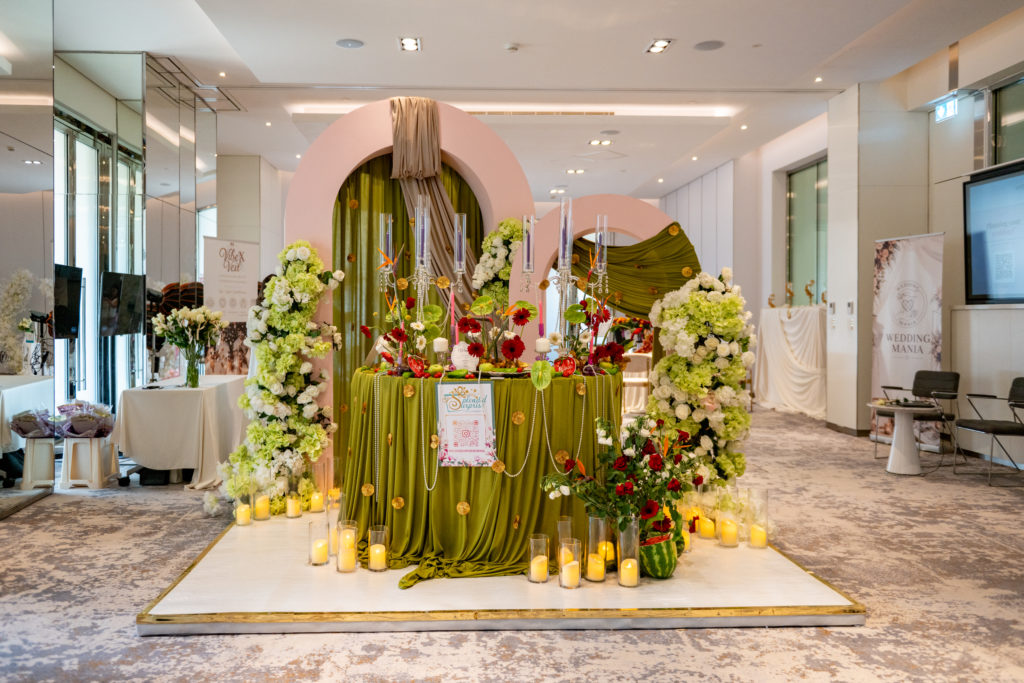
Open ten Dubai decorator accounts and try to tell them apart. The same arches, the same lighting, the same pastel palette, the same drone pull-back. Beautiful content is in surplus here; the industry produces it faster than any audience can learn to distinguish it.
A classic styled shoot solves a problem that was solved years ago: it adds two hundred frames to a thousand that already exist. What it does not deliver is the reason a supplier leaves the office in the first place: a single contact with a real couple. Hence the first rule of the format. A staged wedding without an audience is a cost line. A staged wedding with an audience is a sales channel.
Three formats that keep getting confused
- Styled shoot. A closed production with six to ten suppliers. The product is content and an editorial placement. Leads are structurally impossible: everyone in the room already works in the industry.
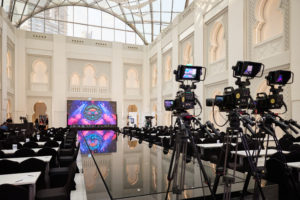
- Wedding showcase. The venue dresses the ballroom in full and invites 40–80 engaged couples drawn from supplier lists. The product is a 1:1 demonstration. The couple sees no render and no mood board. They see the room dressed, the real ceiling height, the light at 20:00 and the actual plating of a hot course.
- Fake wedding. A full party with wedding dramaturgy and paid tickets for guests. The format matured in Latin America as a B2C product: the event funds itself, and suppliers get a demonstration in front of several hundred people plus footage with genuine reactions rather than models.
The Gulf uses the first, occasionally the second, and almost never the third. The commercial logic runs the other way: the third format pays for itself, the second sells, the first merely services the ones already sold.
Economics: nobody pays cash, everybody pays something
The format collapses at one predictable point: when there is no producer, only a group of people contributing ideas. One person has to own the budget, the deadlines and the content rights. From there, the contribution table is fixed:
- Venue: the room in low season, technical minimum, F&B at cost. In return it takes 100% of the frames with a recognisable interior and first position in the supplier referral chain.
- Decor and florals: stock inventory, not new builds. A new structure is fabricated only when it is already costed into a confirmed upcoming booking.
- Bridal salon: gowns released on a strict basis: credit in every publication, no alterations, returned the same day. Skip that clause and the salon loses stock and declines the second time you call.
- Photo and video: the most demanded position and the cheapest to fill, which is exactly why you take volume from it: full package, separate coverage of every supplier’s work, delivery dates written into the agreement.
- Models: cast for buyer resemblance, not for following count. The couple in the room should look like the couple who will actually place the deposit.
Cash comes from whoever receives the leads: a ticket that covers F&B in the audience format, a supplier slot fee in the showcase. All of it sits on a one-page agreement: deliverables, deadlines, usage rights, mutual credits, and the right to pull the material if credits are breached. Without that page, a month later the videographer is still editing and the venue has already run your images as its own.

Gulf specifics: where the format breaks
- Terminology. Not “ceremony” and not “wedding” in the announcement: use showcase, styled experience or wedding preview. Staging a nikah or any religious rite is off the table entirely. That is not a matter of taste; it is a matter of whether you continue working in this market.
- One segment per production. Arab, South Asian and expat weddings do not blend. Kosha and zaffa, mandap and sangeet, a beachfront ceremony: three different buyers, three different budgets, three different supply chains. A “universal” staging sells to nobody.
- Calendar. The season runs October to April and couples lock suppliers six to nine months out. Production therefore belongs to May–August, when ballrooms are empty and the negotiating position is yours; publication and outreach to the database land in August–September. Ramadan comes out of the schedule completely.
- Venue regulations. Alcohol, sound limits, prayer times, rooftop access, open flame and candle rules: confirmed in writing before the announcement, not after the content calendar has been built.
Assembly: six weeks from concept to publication
- Weeks 1–2. Venue and segment first, concept second, never the reverse. A concept written for a hypothetical room gets rewritten three times and exhausts the team before production starts.
- Weeks 3–4. Supplier selection and signed one-page agreements. One supplier per position. Two florists on one project is not redundancy, it is a guaranteed credit dispute.
- Week 5. Production day or live showcase. A non-negotiable line in the schedule: a dedicated hour of detail coverage per supplier, worked off a list. Without it, half the participants walk away with no usable frame of their own.
- Week 6. Delivery, simultaneous publication across every participant, handover of the contact database, outreach to the couples. Scattered posts across a month produce a fraction of the effect of one synchronised release.
What counts as a result
Frame count is not a result. Count instead: contacts captured from couples with a stated wedding date; inbound enquiries within 30 days of publication; editorial placements with credits (a story repost is not a placement); reuse depth, since a properly built package covers three months of feed for each participant plus one piece of venue advertising; and cost per contact measured against your stand at an industry exhibition. If the staging loses to the stand, you produced a photo shoot, not an event.
The bottom line
A staged wedding is not free content. It is an event with a zero cash budget, a named producer, a budget denominated in man-hours and a real buyer in the room. The venue fills a dead month, the supplier leaves with a database rather than an image, and the producer ends up holding a repeatable asset that can be staged season after season and sold as a product in its own right. Everything else is beautiful photography nobody can tell apart from somebody else’s.