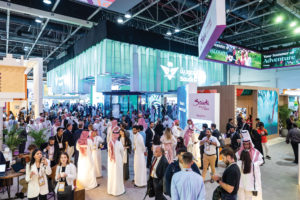


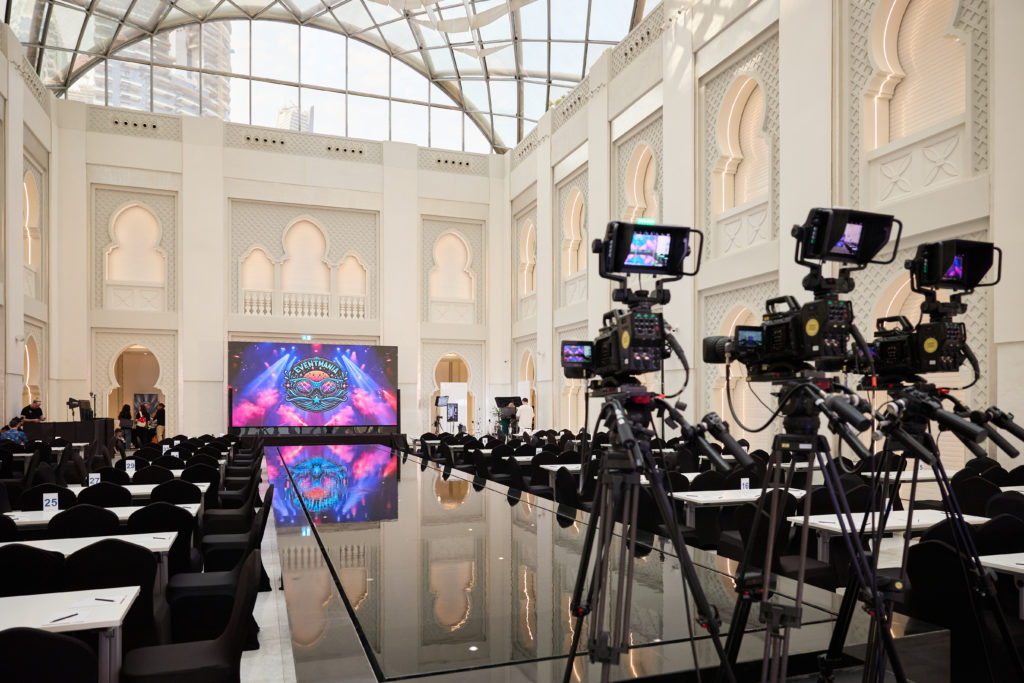

On 8 September the third EventMania Festival took place at Arjaan by Rotana DMC in Dubai. In a year when many industry events across the region scaled down or were postponed, it held its participant numbers. It also grew sideways: Wedding Mania, a dedicated wedding stream, filled an entire hall for the first time.
What was cut, and what was not
Holding scale in a soft market meant choosing what the room does not need. The cuts went to everything that does not affect the quality of the conversation at the table: décor, show elements and part of the outward marketing budget. Three things stayed untouched: the venue, the line-up of speakers and the food. “People forgive a modest stage,” says Larin. “They do not forgive bad logistics and a hungry room.”
The evidence that the audience improved comes from three indicators rather than from atmosphere. The share of decision-makers among registrants rose: owners and directors came, not assistants sent on reconnaissance. Participants began arranging repeat meetings on their own, without the organisers. And more companies returned deliberately rather than out of habit.
Two halls, one coffee break
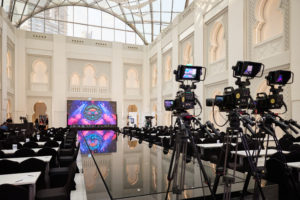
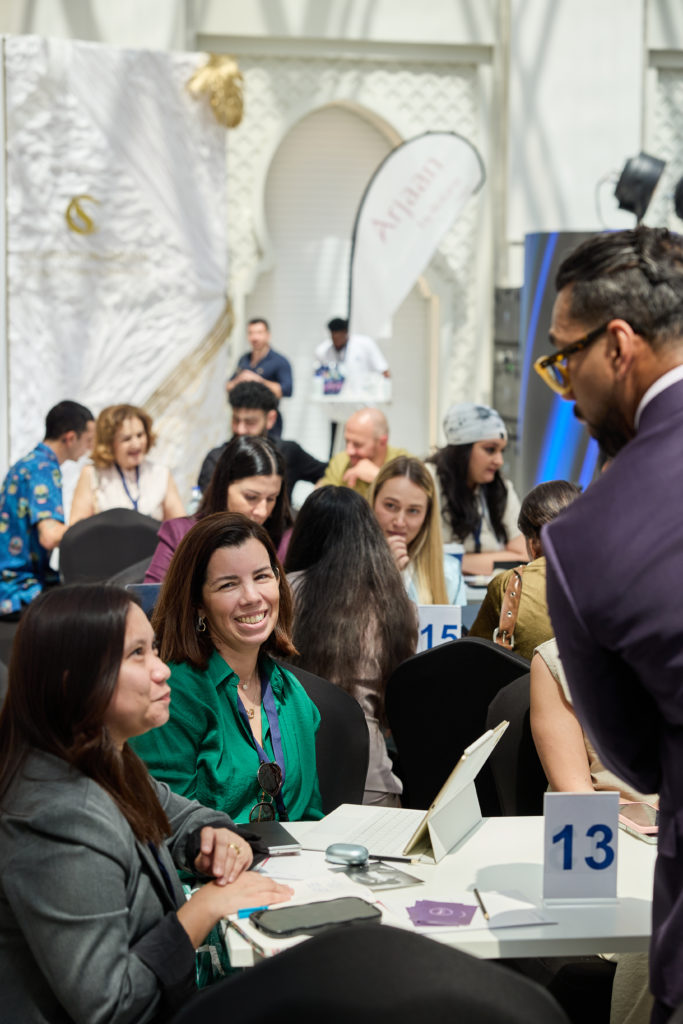
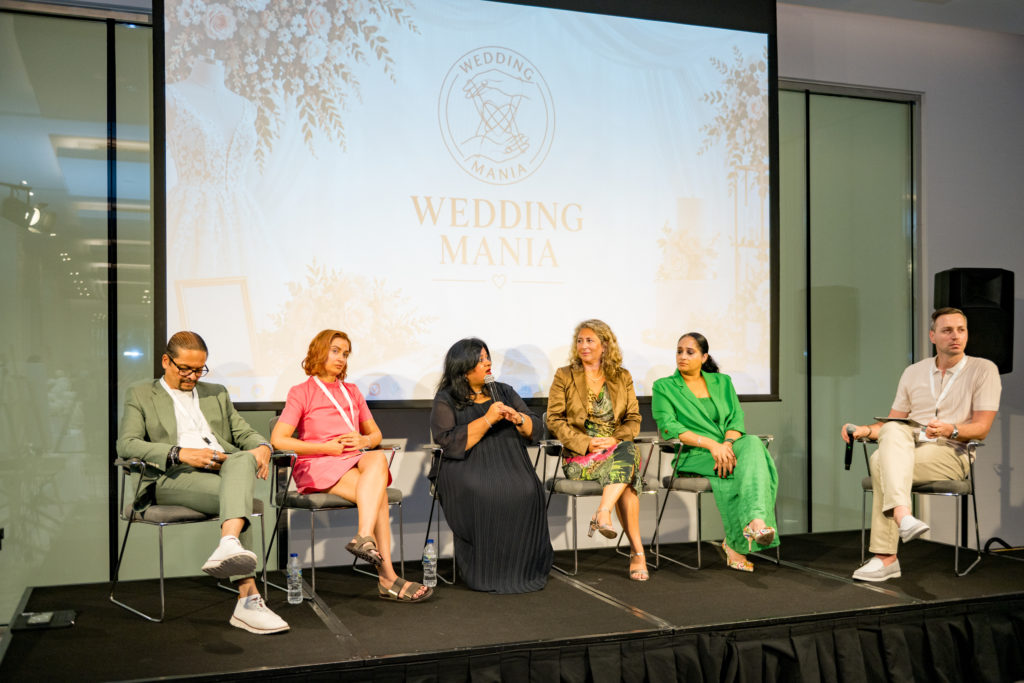
SkyLight Gallery served as the main stage: official opening, Event Maze across 40 tables, the show programme and the keynote block. Veranda Hall belonged entirely to Wedding Mania. By day it ran a B2B programme, the Beyond the Beauty panel and workshops for professionals; in the evening it switched to a B2C programme for brides, with The Modern Dubai Wedding panel and hands-on masterclasses.
The two audiences were deliberately brought together at a shared coffee break on the ground floor, which produced the most concrete result of the day. A decorator from the B2B stream started talking to a representative of a wedding media partner who works with brides directly. Within fifteen minutes they had agreed a joint content project: filming a real wedding that shows the preparation process, not only the finished result. The decorator reaches brides without an advertising budget; the media partner gets exclusive content. “Links like this are not born in separate programmes,” Larin says. “They are born in the coffee queue.”
Event Maze: three minutes and a gong
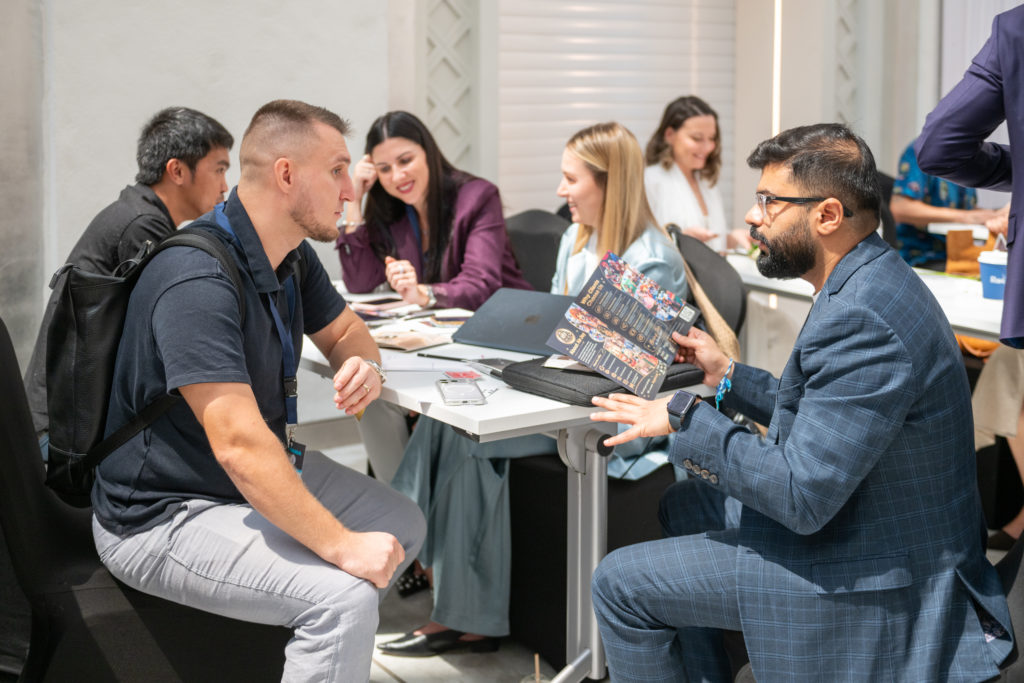
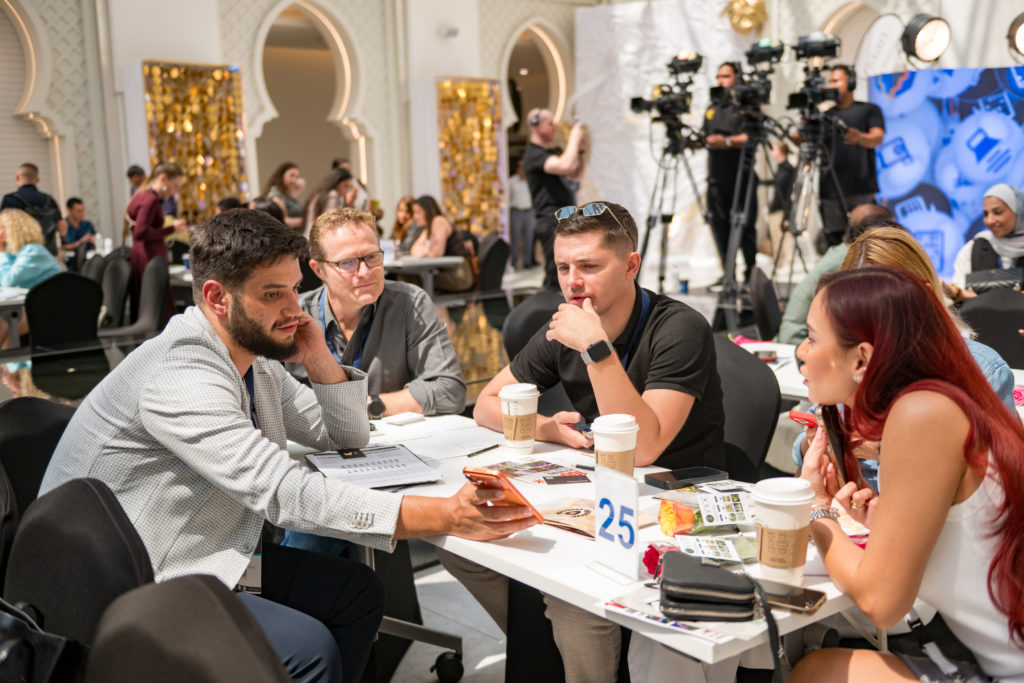
The speed-networking format is built on three-minute rounds. In the first year participants did not grasp the mechanics: they split up, ignored the clock and held up everyone behind them. The fix was rules and volunteers who control the direction of movement and the time spent at each table. Three minutes is enough to introduce yourself and make a first impression. What still wastes them is the exchange of business cards, since every participant receives the full contact database with phones, emails and social links.
Larin tracks direct conversion into contracts over a three-month horizon by asking participants to confirm deals that began at Event Maze. The figure is incomplete, and he considers it more important than reach anyway. In his definition a round that worked is not one where cards were swapped; it is one where, a month later, one side writes to the other unprompted. Collaborations are also visible on social media, and the first ones came from Miral Destinations, Ja Resorts and Celebration Station with Royal Wedding.
The mechanics were left alone on purpose. About 70 per cent of the speakers were new. “Repeated faces kill the sense of novelty,” Larin says. “The second wind of a festival comes from new topics and new people, not from new mechanics.”
Wedding Mania: the Dubai wedding in one hall
Running for the first time as a standalone stream, Wedding Mania was open from 11:00 to 20:00. More than a hundred brides attended; more had registered, but for a first dedicated edition the turnout speaks for itself. Beyond the Beauty brought together the people who build weddings from the inside: décor, florals, production, stationery. The Modern Dubai Wedding spoke to couples about budgets, regional uncertainty, technology and family expectations.
Three workshops were built to be acted on. Keyury Desai walked through a complete bridal transformation, one look for the ceremony and a second for the evening. Vaishali Shah showed which luxury details guests actually notice and which go unseen. Aarefa A. explained what a Pinterest image really costs and how much work stands behind it. The surprise of the day was the staged couple: the “bride” was transformed live during the workshop, the “groom” prepared separately, and then they set off on a shoot across the venue’s décor locations with guests following, phones raised.
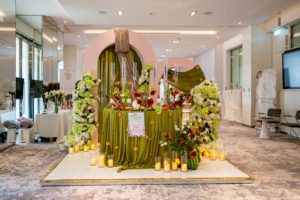
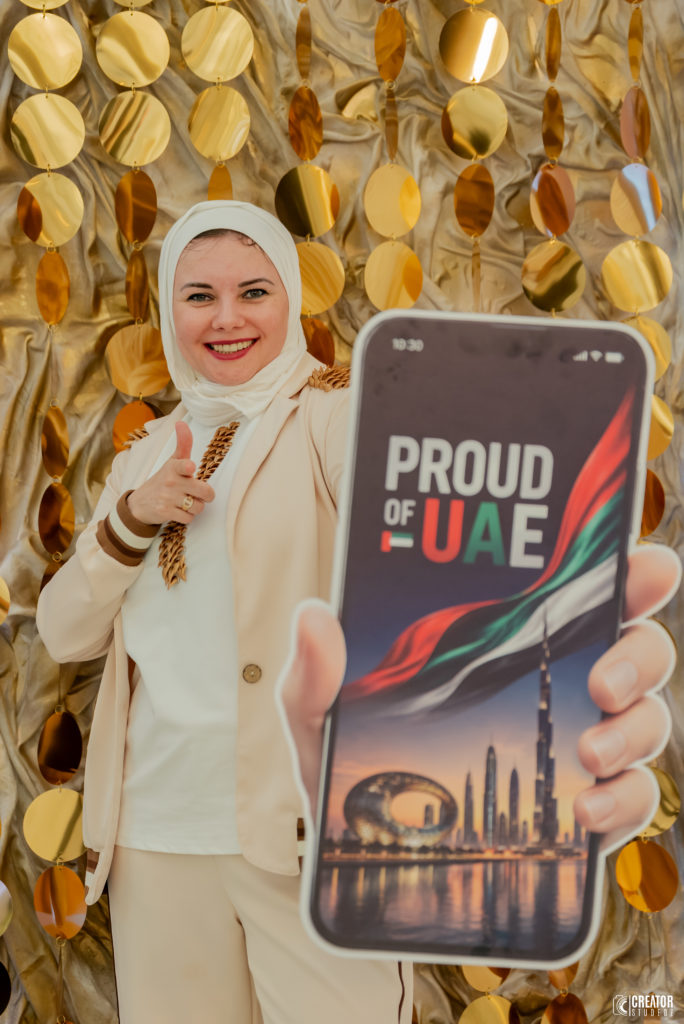
The hall worked as a venue in its own right, with fresh flowers, décor installations, dressed tables and ceremonial arches. The most photographed spot was a heart-shaped arch overlooking Dubai Marina. Ready-made bachelorette packages drew particular interest, filling a gap the market clearly has, and couples learned their first-dance steps on the floor. The longest queue of the day formed for neither a photographer nor a decorator. It formed for the palm reader.
Larin is explicit about the strategic question. Wedding Mania is both a diversification and a test. It separates from EventMania when its audience no longer needs the corporate event next door to justify the trip. Today wedding planners still come partly “along with” the rest of the event market. The lesson of this edition was about language: a corporate buyer thinks in quarterly budgets and KPIs, a wedding supplier in one deal and one couple’s emotion. Next year moderators will be briefed to translate between the two registers inside a single panel.
The empty seats
There were empty seats at the tables, and the organiser said so in the press release instead of cropping them out of the photographs. Larin’s reasoning: everyone in the room saw them, and hiding the obvious costs trust in the figures that are harder to verify. His diagnosis is systemic. In the UAE free or nearly free registration for B2B events is treated as an option, not a commitment. From the next edition the networking zone will require a refundable deposit, returned on attendance, and participants will be assigned seats “as in a cinema”. This will not solve the problem completely, he admits, but it turns a surprise on the day into a manageable percentage.
The empty chairs also gave an organiser something he rarely has at his own event: time. Larin sat down at the tables and learned more about participants than in a year of emails. One idea from those conversations is already taking shape: a joint session on the future of event arenas, in which venues that now compete for the same pool of events appear as participants in one panel rather than rivals. It is at the preliminary stage, and the format will be settled as programme planning for Doha begins.
Next stop: Doha
EventMania Doha takes place on 1 November 2026. Why Qatar rather than Saudi Arabia or Bahrain? Saudi Arabia grows faster in volume, but entry requires a local partner with serious administrative weight. Bahrain does not yet offer critical mass for the Event Maze format. Qatar is compact enough for a full test launch at a sensible cost, where a first-time mistake does not damage a reputation for years. “It is a choice for managed risk, not for the biggest market,” says Larin.
The round-and-gong mechanics travel unchanged because they are built on time, not on cultural codes. What changes is the mix of supplier and buyer categories, reflecting a different balance between government and private event clients, and the registration calendar, because Qatari B2B decisions on participation come later than in Dubai. That shift has already been made. The criterion for each next market is the same: a trusted partner on the ground who understands the format, and a local industry mature enough to be worth competing in.
The founder’s own role is changing with the scale. Part of the panel moderation has already been handed to outside hosts, and Larin will leave the stage entirely once the festival runs in two cities at once. One thing he has never outsourced in three years is the final assembly of the programme: the placement of speakers, topics and timings across halls. “I can see where two similar speakers will kill each other’s dynamic,” he says, “and where an unexpected pairing of topics will create the accidental energy people come back for.”