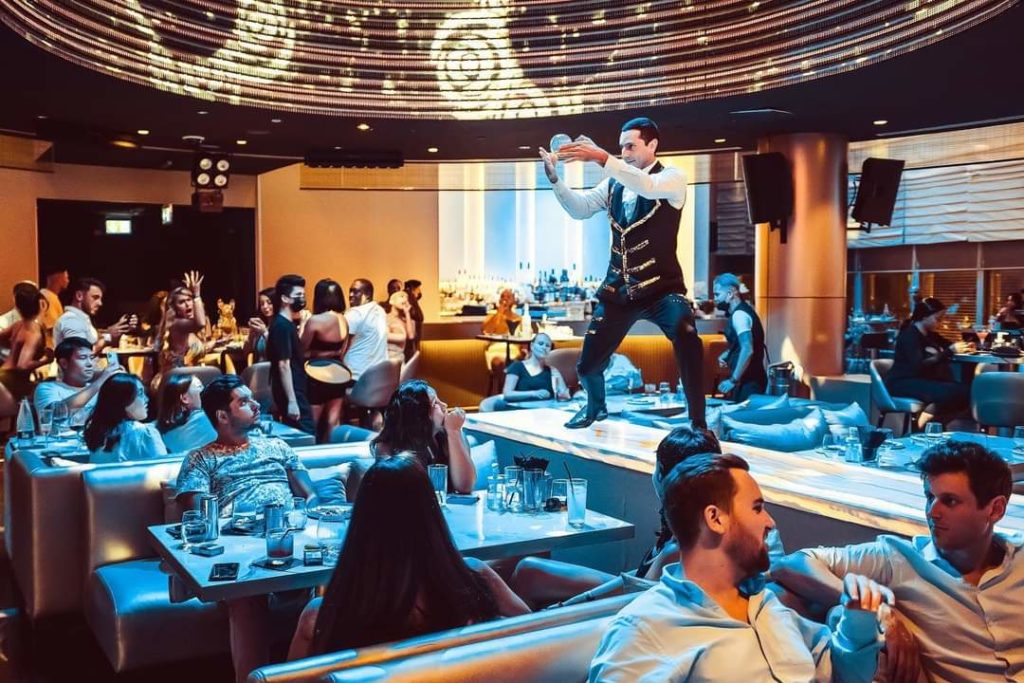
Walter Muñoz is a circus artist and live entertainment professional whose career began in 2003, with more than a decade of professional activity in the UAE and the Middle East. Over the years, he has worked across stage shows, festivals, hospitality and technology-integrated productions, adapting his work to different audiences, cultures and formats. From this experience, he reflects on how his own understanding of entertainment has evolved, and on the role artists, technology and human connection can play in the experiences of the future.
When you arrived in the UAE, what did you find, and what did you have to learn to work with that audience?
When I arrived in the UAE, the market already had sophisticated productions and mainly stage-based shows. I also started encountering entertainment formats that were closer to roaming and street entertainment, with international artists working directly with the audience.
My first experience was JBR/The Walk Carnival in 2016, where I worked for approximately one month doing shows and roaming. For me, it was interesting to observe that although there were artists from different parts of the world, some members of the audience were still not completely familiar with that kind of direct interaction. In some cases, there was some hesitation about when to approach, participate or simply watch.
That made me rethink my own show. Over time, I understood that every country and every culture has a different way of connecting with entertainment. Every time you change your audience, you have to understand again how to communicate with those people and what works for them. When I arrived in the UAE, I had to go through that process again and adapt the way I connected with the audience.
I always tried to take my work towards a more universal language, with more physical comedy and body language. In a country where you can have many different cultures within the same event, I understood that you cannot always rely on language or specific cultural references.
Over time, I also saw that the adaptation worked in both directions: artists learned to understand the audience better, and the audience became increasingly familiar with these international entertainment formats and with the possibility of participating in them.
How did you see the relationship between audiences and artists change over the years?
think one of the most interesting changes was that interaction with artists became increasingly natural. At the beginning, in certain contexts, some members of the audience could enjoy the show but still not be sure that they could also become part of it. Over time, that relationship changed.
In my experience at Riverland Dubai Parks & Resorts in 2018, for example, entertainment was already part of the concept of the park. People went there expecting to encounter artists and activities. But what was interesting for me was seeing how that familiarity gradually moved into other contexts. Over the years, it became increasingly normal to find artists and roaming performers in malls, festivals and different types of events.
I also saw this in a cultural context such as Ramadan. In 2022, I worked throughout the entire celebration period at Salt, Kite Beach. It was particularly significant for me because it coincided with a period of changes in everyday life in the UAE: that year also saw the official weekend change from Friday-Saturday to Saturday-Sunday. Within that context, I noticed how a celebration that traditionally had a more local and contained approach to entertainment was also incorporating international entertainment offerings. Working there throughout Ramadan, I was able to see that openness first-hand.
The following year, in 2023, I saw it clearly again during Street Fest at Dubai Hills Mall, between September and October. The audience was much more accustomed to encountering artists and roaming performers, and the interaction happened much more naturally.
I think this shows that the evolution did not happen only among artists. The audience also learned how to engage with entertainment and understand that they could participate in it.
If I had to summarise it: in 2016, audiences watched and often hesitated about whether they could approach; today, they arrive expecting to participate.
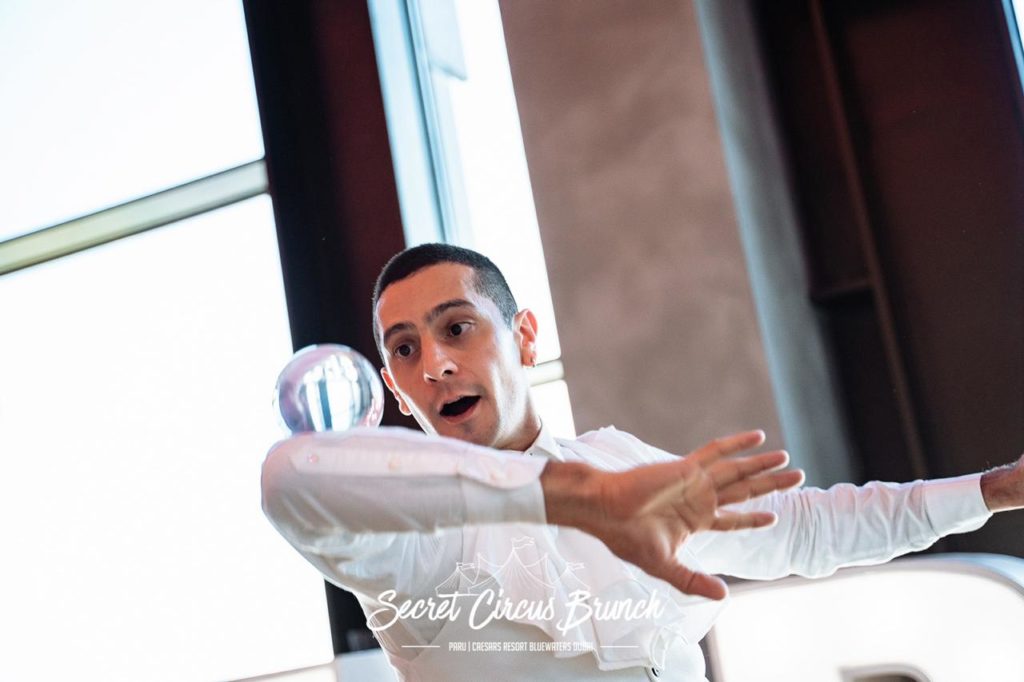
What changed in the way you created a show as you gained more experience?
he pandemic was one of the moments that put that ability to adapt to the test the most. Suddenly, a fundamental part of our work (proximity and interaction) was no longer possible in the same way. We had to adapt formats and protocols, but also find new ways to connect with the audience.
In my case, I developed a show around distancing and hygiene protocols, using that situation as part of the comedy. It worked because it talked about something people were experiencing every day. For me, it was a concrete example of something I already understood about artistic work: an artist can plant a seed in the audience, something that can grow differently within each individual.
From there, I paid even more attention to the possibility of creating a connection that did not necessarily end when the act ended. Over the years, the question also changed. At first it could be very simple: “Let’s do something different. Let’s do circus.” Circus was at the centre of everything.
With experience, I started asking myself a different question: “What do I want the spectator to feel?” Circus is still my tool and my disciplines are still the same, but I began thinking about what I could generate with them depending on the context: surprise, humour, participation, energy, connection or simply a moment that the person remembers.
So the act stopped being the final objective and became a tool to achieve something more. For me, that is the difference between simply doing circus and using circus to build an experience.
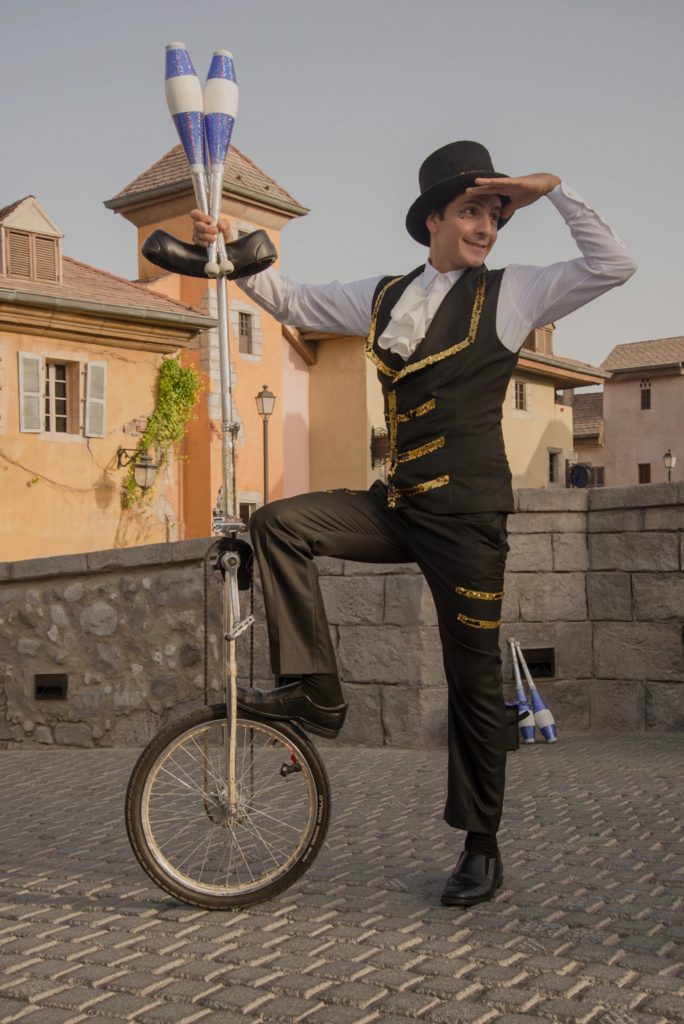
How did your relationship with clients change as your understanding of entertainment changed?
Over the years, the way I relate to clients also changed. At the beginning, when a company hired you, you mainly received instructions about what they needed, and your job was to respond to that request as well as possible.
With experience, I began to understand that many of the questions that used to appear on the day of the event needed to be asked much earlier. I need to know who the audience is, what type of event it is, what space we have, what will be happening around us, what other artists or activities will be there, what the technical requirements are and, above all, what the client wants to achieve through the entertainment.
That changed the conversation. It is no longer simply about “we need an artist,” but about understanding what the client wants to create for people and what format can work best to achieve it.
I also learned that professionalism does not start when you step onto the stage. It involves preparation, communication, safety, knowing the space, coordinating with technicians and other artists, and anticipating any needs before the event. As an artist, I also have to understand that the organiser already has many things to solve. My job should make the event easier to deliver, not add more problems or last-minute work.
And part of that professionalisation is also knowing your own limits. If a client needs something that is not my speciality, I prefer to recognise that and recommend someone who can do it well. For me, being part of an experience also means understanding when my work adds value and when it is better to find the right person.
How did technology change the way you work as an artist and understand the show?
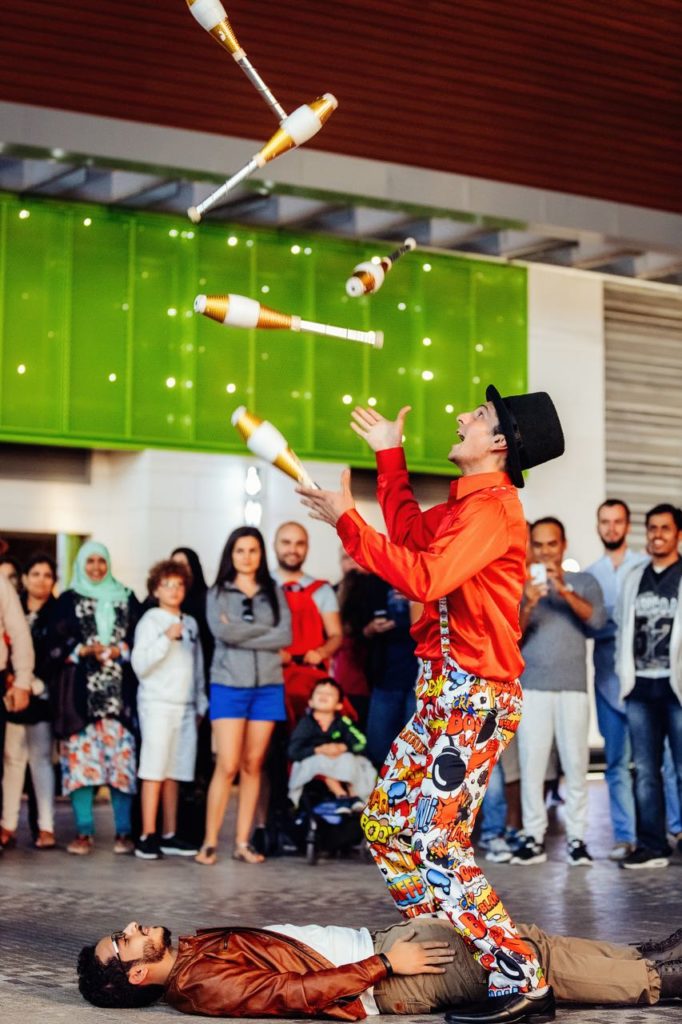
In Dubai, technology is increasingly present in events: drones, screens, mapping, lighting, effects and many other elements are part of productions. That also changed the way I work. A juggling act is already technically demanding on its own, and when you integrate it into a production at this level, you cannot wait until you arrive on stage to see how everything works. The music is prepared beforehand, and it is essential to work in advance with the lighting and sound technicians so that everyone understands the flow of the show.
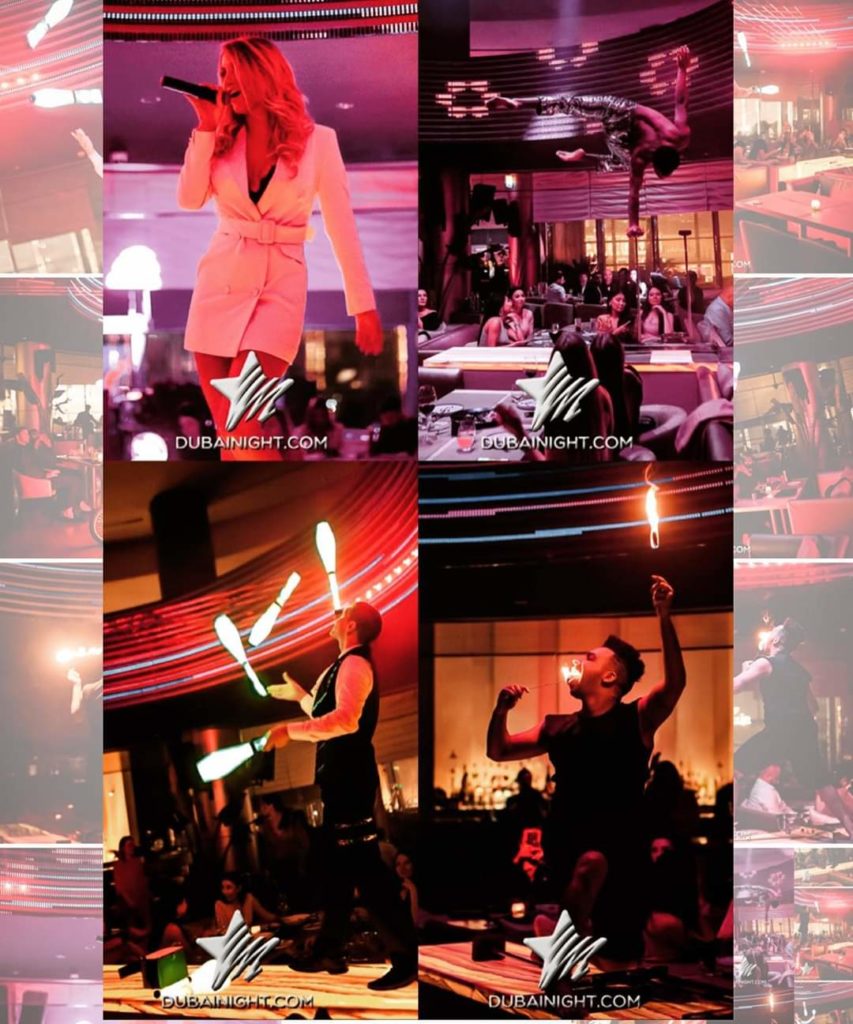
An experience that clearly showed me this evolution was 3BK at Burj Khalifa, where I worked for two seasons, in 2021 and 2022, with my LED juggling show. The space had a full LED ceiling and my performance had to work together with the projections, lighting, smoke and music. Even the colour of the clubs was important to prevent them from disappearing visually against the projections. But the most interesting part was not simply having all those elements, but making them work together: having a light accentuate a moment in the routine without making the juggling more difficult, having a lighting change accompany an explosive moment, or having smoke appear at the right moment so that it became part of the atmosphere rather than simply being another effect.
To achieve that, all the elements have to be connected from the preparation stage. Music that begins more softly, an effect that develops progressively and ends together with a change in rhythm, lighting and other effects can completely transform what the audience is experiencing. When different disciplines are planned together, they stop being independent elements and start functioning as one experience.
That requires everyone involved in the experience to have a common vision and understand what each element is doing within the show. When that connection exists, technology does not compete with the artist and the artist does not compete with the production; they enhance each other and create an experience that neither could create separately.
How is this evolution reflected in what you are doing now, and where do you think entertainment is heading?
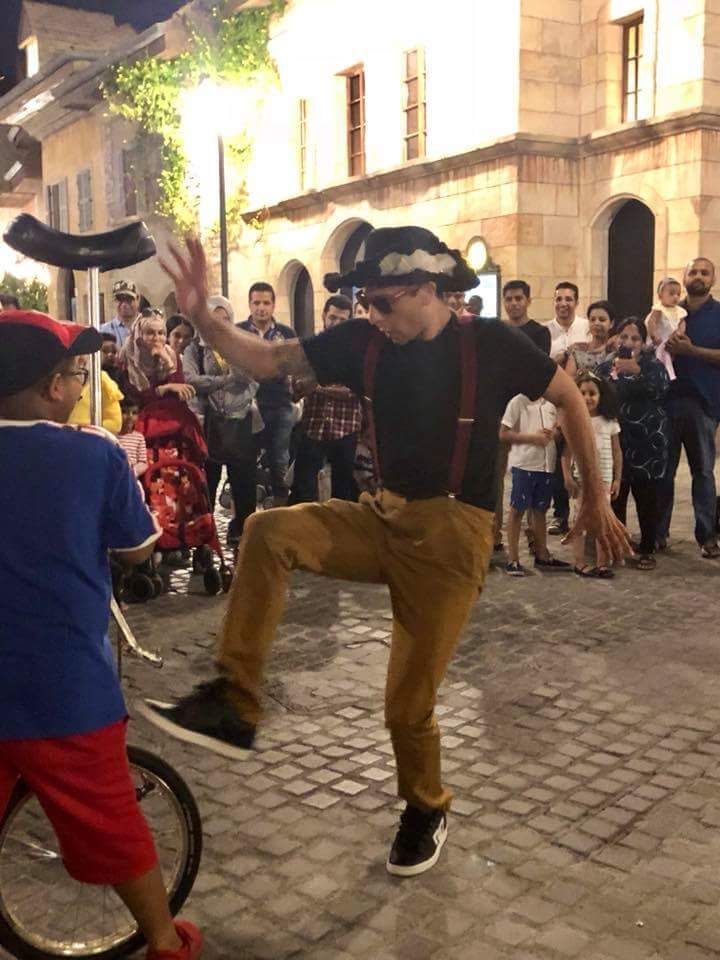
On October 15, I will start a brunch project at Atlantis that takes this evolution one step further. It involves roaming among the guests, encouraging them to have fun and capturing moments that they can later share on their social media and on the venue’s channels.
In recent years, we have seen an increasingly close relationship between entertainment and social media. Venues are looking to create special moments that attract more guests, with games and themes that encourage people to participate and post content. And for me, that is the most significant difference: before, I created the entertainment and people filmed it for their social media; now my job is to help them create their own content.
For this, we will work with props, games and different themes that will change each weekend, with interaction between other artists and the venue. The goal is to capture moments when people are genuinely having fun. Something I also already implement in my work is that, in addition to having a good time, each person can take something tangible with them: a photo, a memory or a souvenir from the entertainment.
It is no longer only about performing an act, but about becoming part of the experience and helping people live it and take it with them.
I think we are moving towards a point where we will no longer be able to separate the show so easily from everything around it. Technology will continue to advance and we will see increasingly immersive productions, with new forms of lighting, projection, artificial intelligence, drones and other resources. But for me, the important question is not how far technology can go, but what we want to make people feel with it.
There is a risk when technology starts developing for its own sake and the objective becomes simply to surprise because something is technically possible. We could end up creating experiences that are visually impressive but emotionally empty. That is where the role of the artist becomes even more important: someone has to interpret, make decisions, understand the audience and give intention to everything that is happening.
That is why I do not think the future is about choosing between the human and the technological. I think we are moving towards an increasingly close symbiosis between technology, artist, emotion and audience. Technology will change the way we create and probably also the way we relate to shows, but the need to connect with other people will not disappear.
That is why I believe the real luxury in the coming years will not be having more technology, but having a person. When anyone can buy drones, mapping and artificial intelligence, what cannot be copied is an artist who looks at you, reacts to you and makes that moment something that cannot happen exactly the same way twice. If an experience works exactly the same without the artist, perhaps it is not an experience, but decoration. And perhaps that is the next challenge for those of us working in entertainment: not only asking what we can do, but what is worth doing.