



As a foodie, I scan a lot of QR codes on restaurant menus, and the gap between the good ones and the bad ones is hard to miss. Too often it opens onto a PDF that takes an age to load, the type too small to read, built for a printer rather than a phone. Other times it’s the opposite: a menu made properly for the screen in your hand, quick to open, with a line on the dish or the pairing that the paper menu never had room for. Same square, two completely different jobs, depending on whether anyone thought about what happens after the scan.
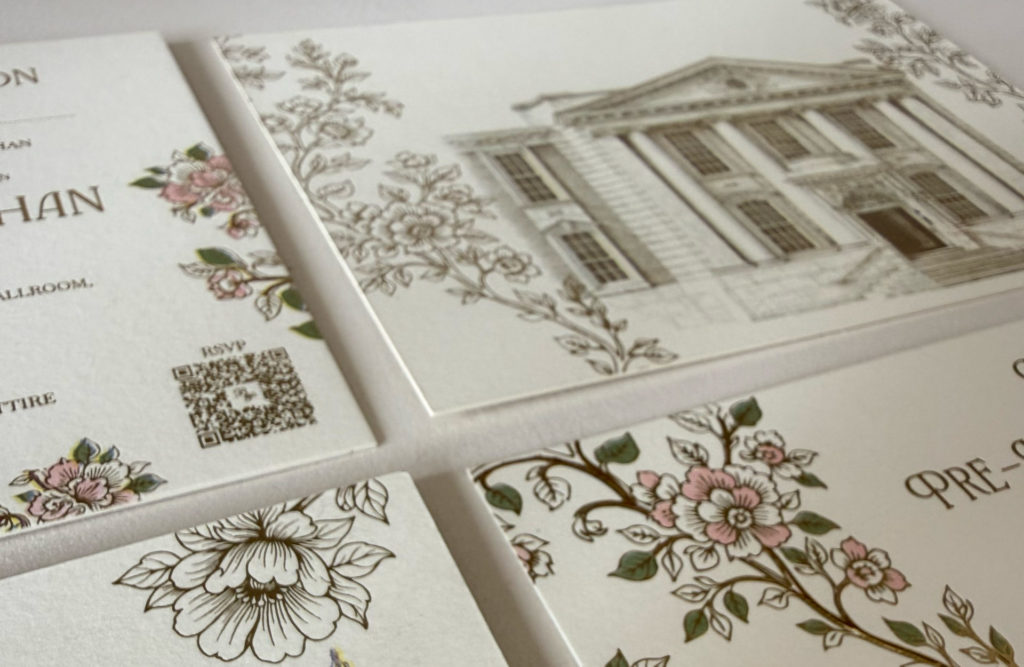
The same is true on the corporate stationery we produce at Creative ID and the wedding stationery we produce at Ananya Cards. A small square, printed straight onto the card, can carry full event details and sponsor information on a corporate piece, or the story of how a couple met on a wedding one. An RSVP form or a note on dietary requirements sits one scan away, on a piece of card someone is already holding in their hand. Or it can be placed on digital stationery just as easily.
QR codes have stuck around for a reason. Over the last few years, they’ve become part of how printed material is expected to work, not a passing trend. A code can take on brand colours or an unconventional shape without losing its ability to scan, and a logo can sit at its centre too, worked into the pattern rather than pasted over it. Done well, it reads as part of the identity rather than something bolted on afterwards.
Corporate and MICE events
I put a QR code on my own slides when I spoke at Superwomen Retreat in Dubai, linking straight through to downloadable resources delegates could take away and use in their own businesses. No one had to scribble down a link or hope they’d remember to look something up later. They scanned, and it was already in their hand.
At a corporate or MICE event, a code earns real weight for the same reason. Printed onto a delegate’s badge, it can lead straight through to their LinkedIn profile or a one-page company summary, useful in a room full of people trying to place a name to a face. On an event card or table sign, it can carry the full programme, adjusted in real time if a session moves, along with sponsor information that would otherwise take up half the printed page.
That last part matters more than it sounds. Sponsors want a return on the space they’re paying for, and a code turns a badge or an event card into one of the most effective branded touchpoints on the day: a direct route through to their stand or straight to booking a meeting.
The organisers benefit too. A code on a badge or a card can be tracked, which means knowing who actually engaged with a sponsor’s information rather than guessing from footfall. For anyone reporting back to a client or a board after the event, that data is worth having.
It also does something paper alone never could for the guest list itself. A code on an invitation that leads through to a personalised RSVP page can show who responded, and roughly where people dropped off along the way, giving organisers a much clearer read on likely attendance well before the day itself.
Weddings
For weddings, the same idea works. A code on the invitation can lead through to the wedding website or the RSVP form. It can just as easily carry dietary requirements or directions to the venue, without crowding the card itself. On the day, one placed on a table card or a menu can share the story of how a couple met or open a shared album guests can add their own photographs to.
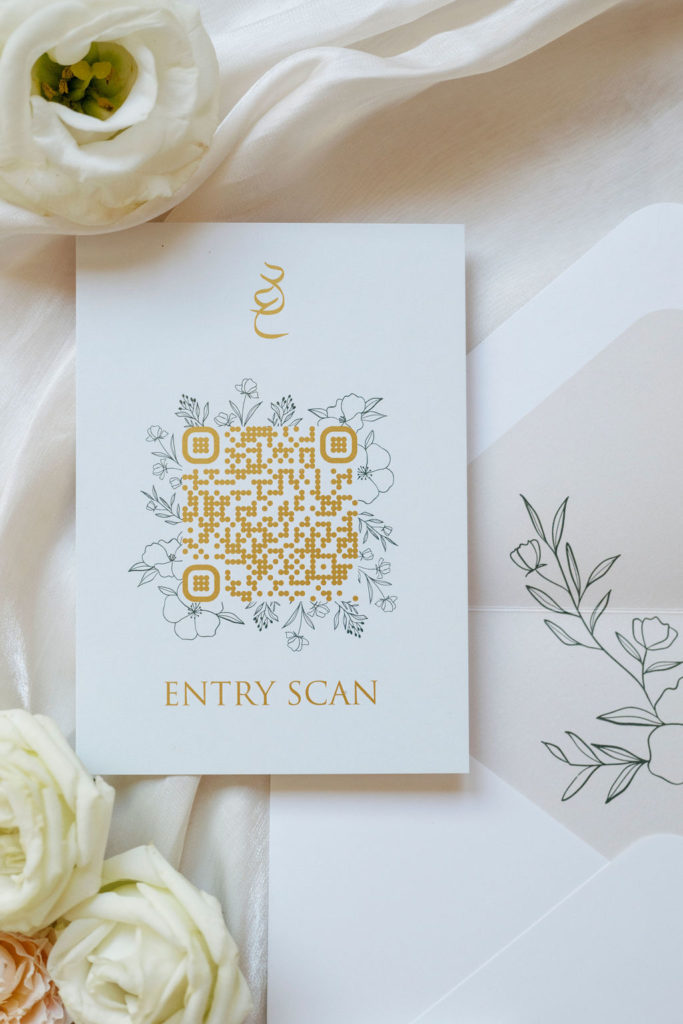
What happens after the scan
A QR code is only as good as what’s waiting on the other side of it.
That’s the thinking behind what I call a ‘signature moment’. Brand truth creates brand difference, and brand difference is what creates feeling in an audience. Feeling is what creates the memory. That’s my definition. A QR code is one route to building that moment into a piece of stationery, but only if what’s waiting on the other side of the scan is worth the reaction it creates.
Send someone through to a page that’s slow to load or simply says “thank you for scanning”, and the moment’s been wasted. Send them somewhere useful and well branded, and the code becomes another one of the touchpoints doing real work for you, whether that guest is a wedding guest or a delegate at a conference.
Practical notes for organisers
- Decide the destination before the design and make it a page built for that specific piece rather than a general homepage. That’s what makes the results measurable afterwards.
- Test the scan at actual print size and in the lighting the room will actually have, not just on a screen at your desk.
- Give the scan a reason, not just a destination. “Scan for your table” or “scan for the story behind this dish” does more work than a code with nothing to explain it.
- Keep a fallback for guests without signal or a smartphone in hand. Printed information should never fully depend on someone being able to scan it.
- Brief sponsors on what the code should actually do for them.
- If tracking scans is possible, use it, and keep watching after the event itself. For merchandise or passes people hold onto, scans in the weeks that follow show whether an item’s still doing its job.
None of this replaces the paper itself. The events getting real use from a QR code pair it with good design rather than swap one for the other, and a guest or a delegate still notices the well-made piece in their hand first, before they ever reach for their phone. That’s the standard we hold codes to on every piece of stationery that leaves the studio, corporate or wedding, and the same one that shapes brand work at Ananya Cards and Creative ID: what does this do once it’s actually in someone’s hand.

Vaishali Shah




