


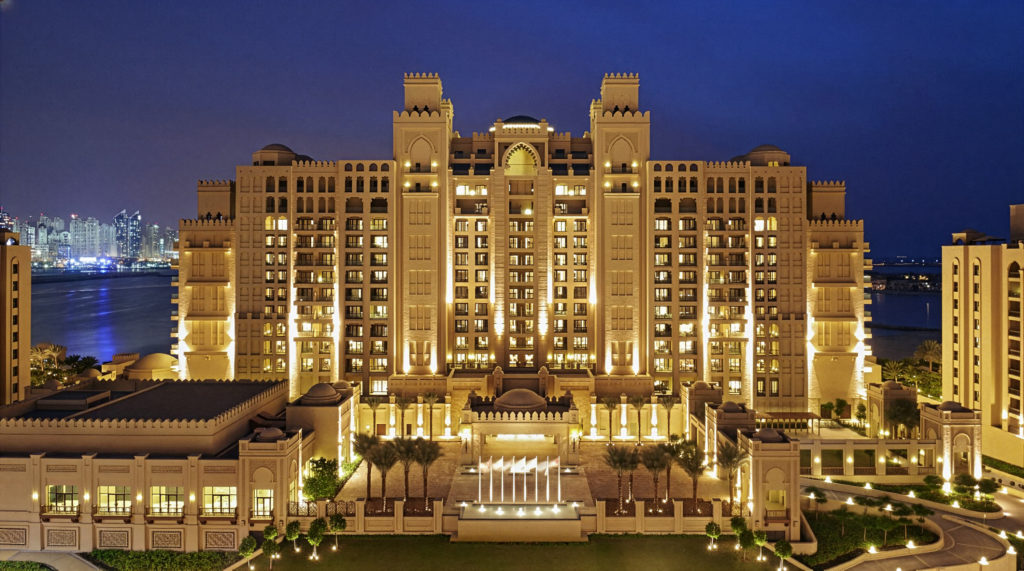

At Fairmont The Palm, a 13-day global incentive program for approximately 320 top-performing achievers demonstrated how multi-layered event architecture can be executed at scale without compromising service consistency or guest engagement.
Designed as an end-of-year recognition journey, the program aimed not only to reward performance but to strengthen long-term loyalty and emotional connection with the brand. This required a carefully orchestrated balance between structured programming, premium hospitality, and experiential moments across multiple venues.
Challenge: Scale, Safety, and Constant Change
From the outset, the program combined several high-risk variables: large guest volume, premium expectations, multi-venue execution, and evolving client requirements.
One of the key moments was a beachfront awards ceremony – a format that required precise synchronization between indoor ballroom programming and outdoor staging. Managing guest flow, timing, and technical transitions between these environments demanded tight operational control and contingency planning.
At the same time, accommodation management became increasingly complex. Last-minute changes included additional room allocations, upgrades, VIP amenities, and extended access to Fairmont Gold Lounge services for a significant portion of the group. Maintaining consistency across these requests without disrupting overall operations required constant coordination between departments.
A critical issue emerged shortly before the event when the ballroom layout – initially developed by an external planner – was found to violate safety standards, including blocked emergency exits and compromised surveillance visibility. The hotel team intervened immediately, redesigning the entire setup within a limited timeframe to ensure full compliance while preserving the event concept.
In parallel, the client introduced a late-stage request for a nightlife experience. Without relocating guests off-property, the team transformed an internal venue into “Club Napola” – a fully operational club environment with integrated lighting, entertainment, and beverage service. This allowed the program to expand without adding logistical risk.
As the events team summarized:
“Making special happen is not just a phrase for us – it is how we operate. We adapt quickly, solve challenges in real time, and never compromise on safety or guest experience.”
Solution: Multi-Venue Strategy and Controlled Guest Flow
The success of the program relied on clear zoning and functional distribution of venues.
The Palm Ballroom became the central hub, configured in a cabaret-style layout for 320 guests. This ensured visibility, engagement, and efficient circulation during award segments.
The Palm Courtyard was reimagined as a “Secret Garden” – serving both as a registration zone and an experiential welcome area. This transition space played a key role in setting the tone of the event while managing arrivals in a controlled and comfortable way.
Additional venues – including Gulf Rooms 1–5, the Crescent Room, and the Boardroom – were used as breakout and operational spaces. This allowed parallel programming, private meetings, and flexible scheduling across the 13-day agenda without congestion in core areas.
Technical production focused on reliability and consistency rather than spectacle alone. Lighting, AV integration, and stage design were aligned with program flow, ensuring continuity between formal and informal segments.
Food and beverage operations were executed as synchronized service for the entire group, with strict control over timing, dietary requirements, and quality consistency – a critical factor in maintaining the overall experience across multiple days.
Operational Framework
The program extended over 13 days and included staggered arrivals, structured business sessions, recognition events, and daily activities.
Approximately three days were allocated for setup and breakdown, covering ballroom transformation, technical installation, and multi-space configuration. This required precise scheduling to avoid disruption to regular hotel operations.
At peak engagement, daily team-building activities involved up to 250 participants – becoming one of the strongest drivers of interaction and group cohesion throughout the program.
Outcome and Industry Takeaways
The event was delivered without major disruptions across its full duration, despite multiple last-minute changes and operational challenges.
Client feedback highlighted service consistency, adaptability, and the overall guest experience as key strengths. Notably, the integration of daily activities significantly increased engagement levels and strengthened group dynamics beyond the formal program.
From a planner’s perspective, several conclusions are clear:
Large-scale incentive programs require integrated thinking across accommodation, programming, and operations – not isolated planning.
Flexibility is no longer optional. The ability to absorb last-minute changes without affecting the guest experience defines operational quality.
Safety and compliance must remain non-negotiable, even when they require reworking approved concepts.
Multi-venue strategies are essential for long-duration programs, allowing parallel flows and reducing operational pressure.
Ultimately, this project reinforces a fundamental principle of large-scale event delivery:
the guest should experience simplicity – even when the system behind it is highly complex.





