

Fighting for the Client is the DMC’s job
There’s a fine line between flexibility and losing one’s professional standing. When a client says “I want it this way,” the DMC’s job is not simply to nod and say “yes, sir, of course, sir.” The job is to explain why it won’t work that way. And if the client still insists – they must be informed of the consequences. So that later they cannot ask: “why did you know and say nothing?”
On the other hand: if a client needs a conference, a gala dinner and several activities delivered in two days – the DMC’s job is to try to make it happen. At maximum capacity. Fight for the right dates, the right format, the right venue. Until you run into an absence of common sense or a legal constraint. Only then does the time come to honestly say “no.”
We had a project where the client wanted a hall with ceilings of seven metres and above – and at the same time did not want a beach hotel, so that guests would stay focused on the conference. We called literally every hotel in Dubai with suitably high ceilings. The best option turned out to be a beach hotel – precisely the one the client had originally wanted to avoid. The DMC’s job in such a situation is not to choose for the client, but to help them choose for themselves. What matters more: the ceiling height or the absence of a beach? In the end the client chose the hotel, and at a good price – low season. The one that had started out as the least suitable.
How do you tell whether a DMC is genuinely flexible? Very simply. Count how often you hear “no” from them. The more often – the less flexible. But something else matters just as much: if “no” comes without an explanation, that’s not professional. You need to understand why. And it’s also worth remembering that when someone says “yes,” it still needs to actually get done. Not every promise can be kept, and not everyone has the honesty to say so upfront.
"Flexibility is not about saying yes to everything. It’s about knowing what’s worth fighting for - and what isn’t.”
Flexibility as a Business Strategy
We often hear about large companies going bankrupt. We never hear about small ones failing – but that’s easily explained: nobody knows they exist. The question, however, is not about size.
There are companies that resemble a cruiser – enormous, solid, with large reserves. They don’t sink, but as a rule they survive because they’re tied to some other business that keeps them afloat. Because our industry – event and MICE – reacts to any political or economic shift faster than almost any other. One escalation in the region is enough, and bookings start unravelling, dates shift, budgets get revised. In those moments, it becomes very clear who can adapt quickly and who cannot.
In my understanding, a flexible DMC is neither large nor small. It’s a sailing vessel that moves with the wind – but when necessary, picks up the oars itself. It grows quickly – through staff or freelancers – when there’s demand. It sheds everything unnecessary just as quickly when the market drops. And it always has several revenue streams to draw from.
This was clearly visible during the pandemic. FIT and VIP requests returned first – not MICE, but they helped stay afloat until group travel resumed. Some went into private events, which DMCs usually overlook. Some launched virtual formats. Those who couldn’t adapt quickly left the market. Those who could – survived.
Flexibility Towards Oneself
There’s something rarely discussed in the context of flexibility. Sometimes the right answer is to decline a project.
There was a client who made clear from the start: we’ll handle audio and video ourselves. Entertainers too. And the venue, in the end, they also chose themselves – after we had already proposed and costed several options, conducted site inspections, and the space the client ultimately selected was considerably below the level of their original brief. It was evident the client had given inaccurate budget information from the outset. The client then asked us to cost the AV anyway – presumably to benchmark their own supplier’s pricing. Our response: “We’re sorry, but we have no intention of competing for the title of Dubai’s cheapest DMC.” Our time and our resources deserved better use.
We see working with clients as a collaboration, not a service transaction. For a project to succeed, all parties need to put in the effort. Yes, the client needs a great event just as much as we do – if not more. But this is a two-way street. If what you need is for someone to run after you and fulfil every request – that’s not a DMC. That’s a different arrangement entirely.
The Region: Where Service is a Culture
There is another dimension of flexibility – the readiness of the market as a whole. And here, the Middle East occupies a particular place.
I remember a client visiting from Europe for a site inspection. We pulled up to the hotel and I was about to get out of the car. She said: “Are you going to leave the car here?” – “Of course, valet parking.” She laughed: “Is it always like this here?” Yes, always like this. And the same goes for petrol stations: you pull in, lower the window slightly, say “full tank” – and that’s it. The region has accustomed its residents to the idea that being looked after is the default. Those who leave for other countries tend to remember the Emirates with a particular fondness.
For the MICE market, this means a great deal. The willingness to make things work, the genuine desire to please, the instinct toward a return visit – these are cultivated here through culture, not written into a manual. And it shows.
But there are nuances worth understanding. There is a concept – inshallah. If Allah wills it. It can mean both “I will do everything in my power” and “unfortunately I cannot” – and no one will tell you which one it is. Only real experience working in the region gives you an understanding of when it’s the first and when it’s the second. This is why follow-up here is a skill that cannot be replaced by general assurances about trust.
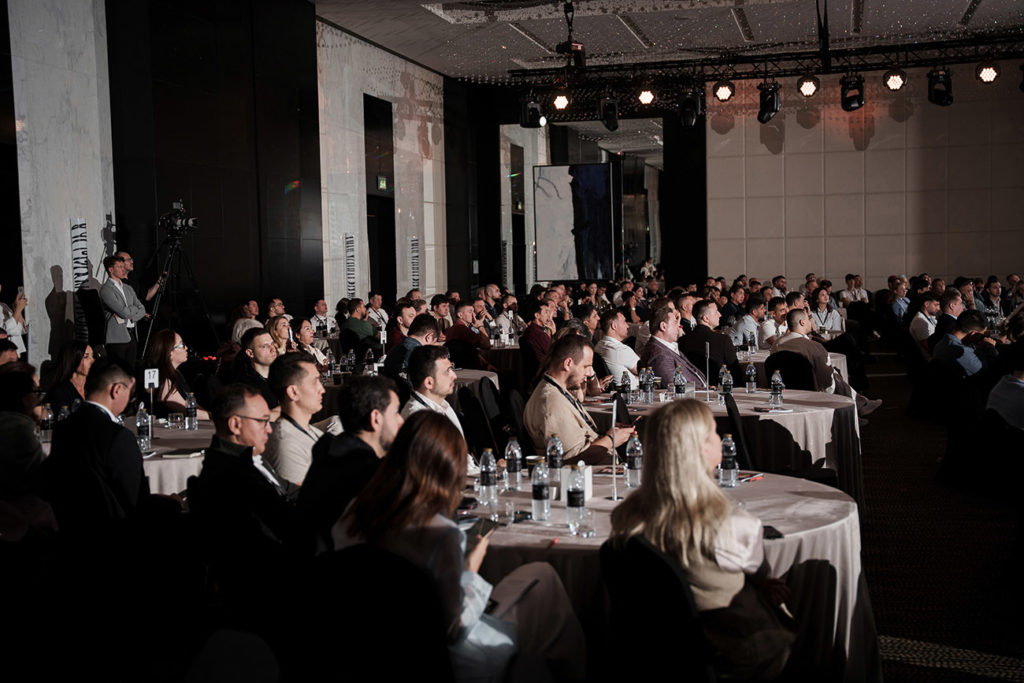
Practically every project is a challenge – in at least one element. Sometimes in all of them. Flexibility is not a personality trait and not a slide in a pitch deck. It’s a working state – when the project is assembled, the team knows which way to move, and the client knows they can trust – not just the words, but the way you conduct yourself when things get difficult.