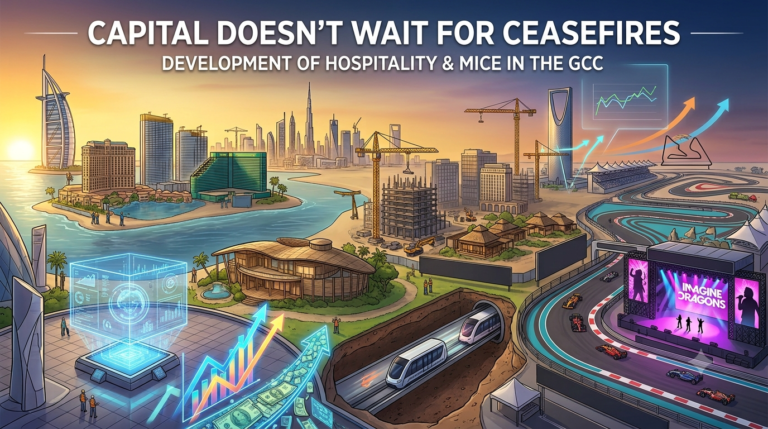

Capital Doesn’t Wait for Ceasefires
Deals were signed. Headquarters were moved. Construction started. Forecasts were published.



Deals were signed. Headquarters were moved. Construction started. Forecasts were published.
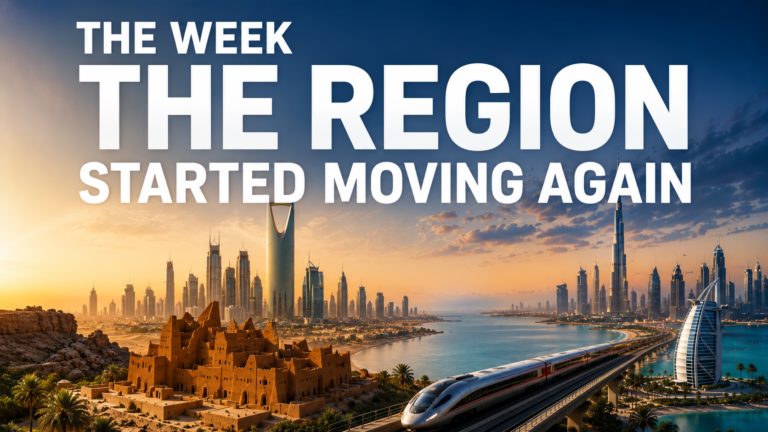
The signals came from Riyadh, Dubai, Paris, and the rails between the emirates. Together they describe a market recalibrating – not waiting.
This week the GCC events market got something it has been missing for months: a direction. Not a forecast, not a statement of intent – an actual direction, with names attached, dates confirmed, and capital in the room.
It started with a word.

When we speak about the future of hospitality in the Middle East, the conversation often turns to artificial intelligence, digital transformation, new accommodation formats or sustainable tourism.
June in the GCC has traditionally marked the close of the active business season – a moment to wind down before the summer heat sets in. For years, the Middle East Event Show (MEES) served as that final industry milestone: the last major gathering, the place where the season wrapped up and informal accolades were handed out.
For years, the GCC’s relationship with global events awards was largely one of participation – entering, learning the format, occasionally placing. The 16th edition of Eventex Awards, announced in May 2026, marks a different chapter. The region didn’t just show up. It led.
The first week of June delivered a concentrated set of signals about where the GCC events industry is heading. Dubai convened its largest-ever stakeholder briefing, a new investment platform launched specifically for event businesses in the UAE, and the global Eventex Awards confirmed the region’s growing weight on the world stage. Taken together, these aren’t isolated news items – they sketch a market that is actively building its next infrastructure layer.
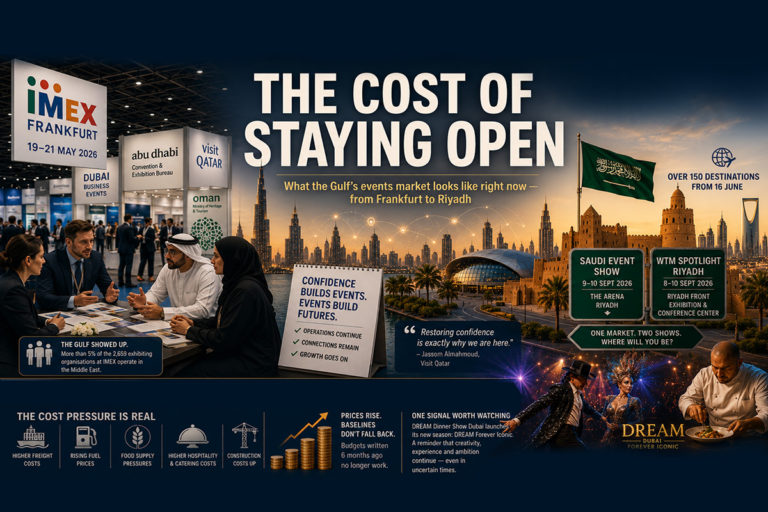
There’s a simple test for how an industry is doing: who shows up when showing up is hard.
At IMEX Frankfurt (19–21 May 2026) – the world’s leading trade platform for the meetings industry – the Gulf showed up. All of it. Dubai Business Events brought a delegation of 20 co-exhibitors. Abu Dhabi came with a pavilion of around 22 partner companies. Visit Qatar held closed-door meetings with international organisers and met with ICCA about future conferences.
Dubai, Doha, Muscat, Riyadh – the entire Gulf came to Frankfurt with the same message: we’re here, we’re open, we haven’t broken. IMEX Frankfurt 2026 (19–21 May) was the first major platform where GCC countries showed up as a consolidated front before a global audience. That fact alone is a signal – and a more important one than any figures on the stands.
The event industry has no shortage of networking events. The problem is that most of them still rely on passive communication: people exchange business cards, add each other on LinkedIn, and leave without clear follow-up or commercial outcomes.